





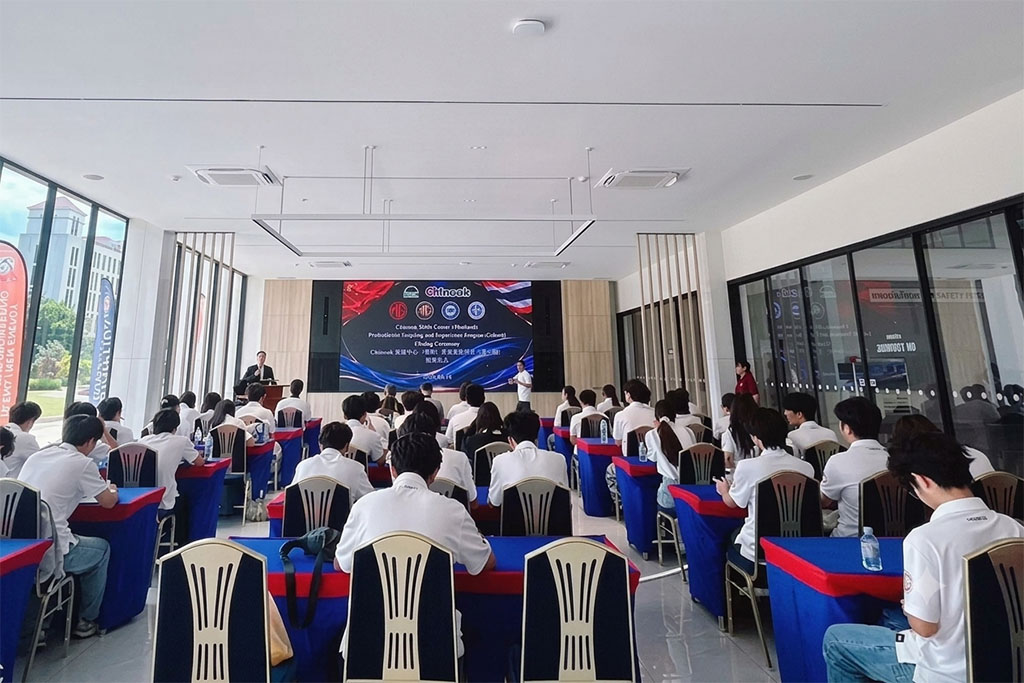
Chinauto Skills Center (Thailand) Second Practical Training Program Successfully Concludes in Bangkok
On August 14, the closing ceremony of the 2026 Chinauto Skills Center (Thailand) and the second practical training program of the MG-AU New Energy and Intelligent Vehicle Industry College was successfully held at the Gabriel Mary Research and Learning Center for New Energy Vehicle Technology on Assumption University’s Suvarnabhumi Campus. The 15-day program, which began on July 31, was jointly organized by the Electric Vehicle Association of Thailand, SAIC Motor-CP (MG), the Chinauto Skills Center, and Assumption University, with Jinbu College Thailand, Zhejiang Ocean University, Hangzhou Polytechnic, and Sichuan Jiaotong Polytechnic University participating in the training and instruction.
Built on the broader framework of Belt and Road cooperation between China and Thailand in industry, culture, and education, the second program expanded and upgraded the cross-border industry-education integration model validated during the inaugural session. It represents a benchmark initiative for sustained cultivation of new energy vehicle talent in ASEAN. All participants successfully completed the full program of theoretical study, workshop practice, and enterprise-based learning.
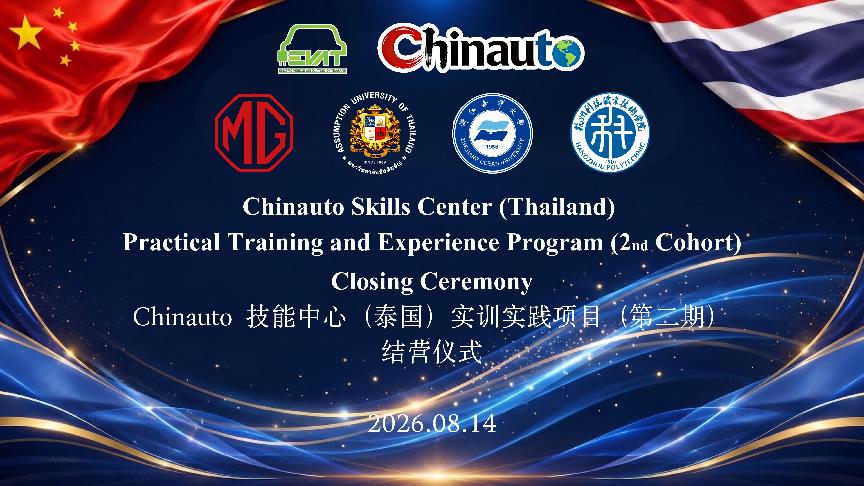
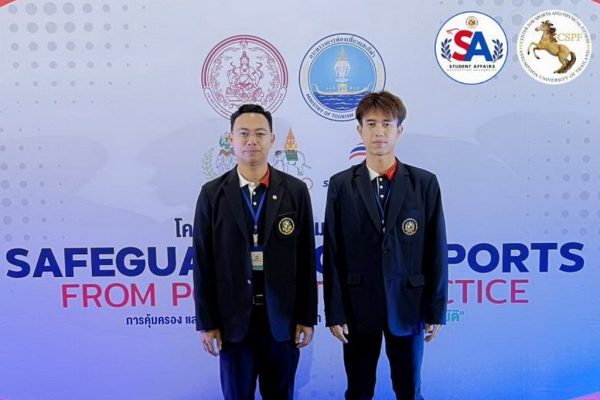
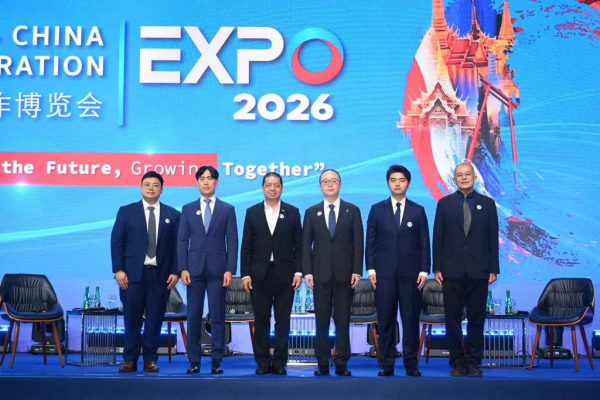
Opening backdrop for the second practical training program
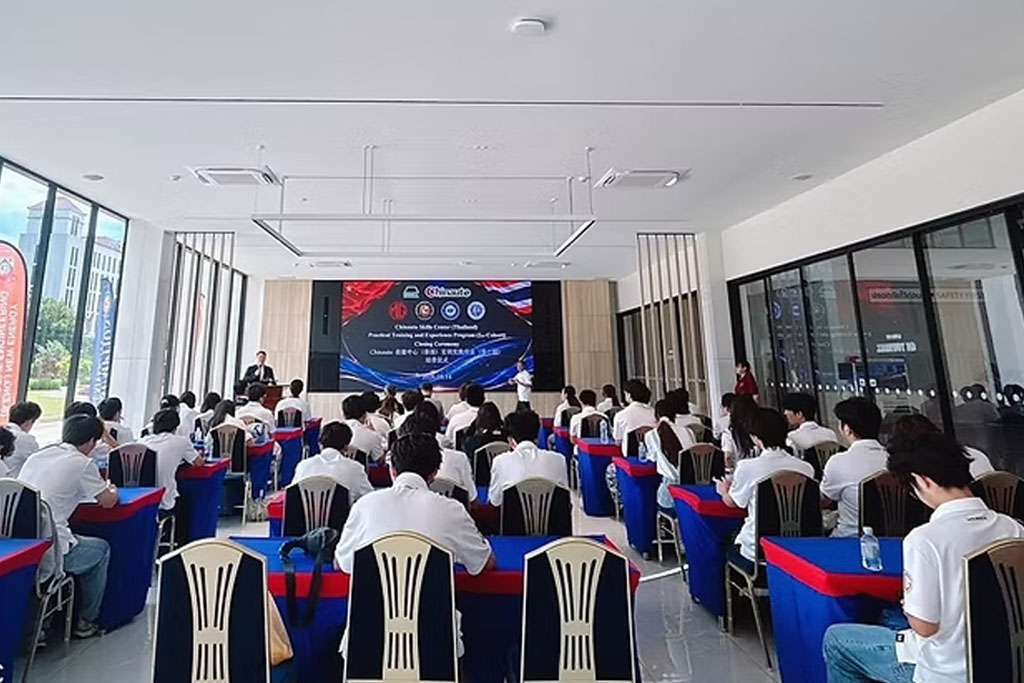
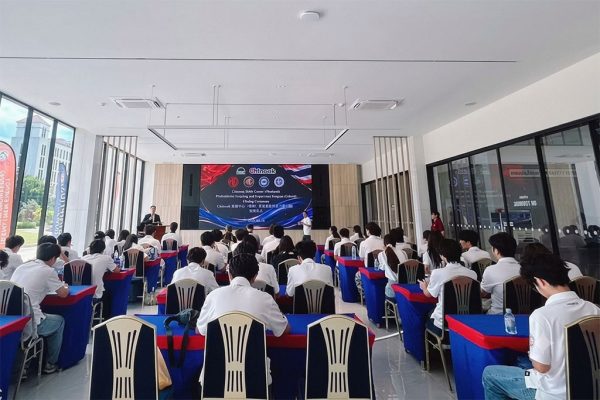
Closing ceremony at Assumption University
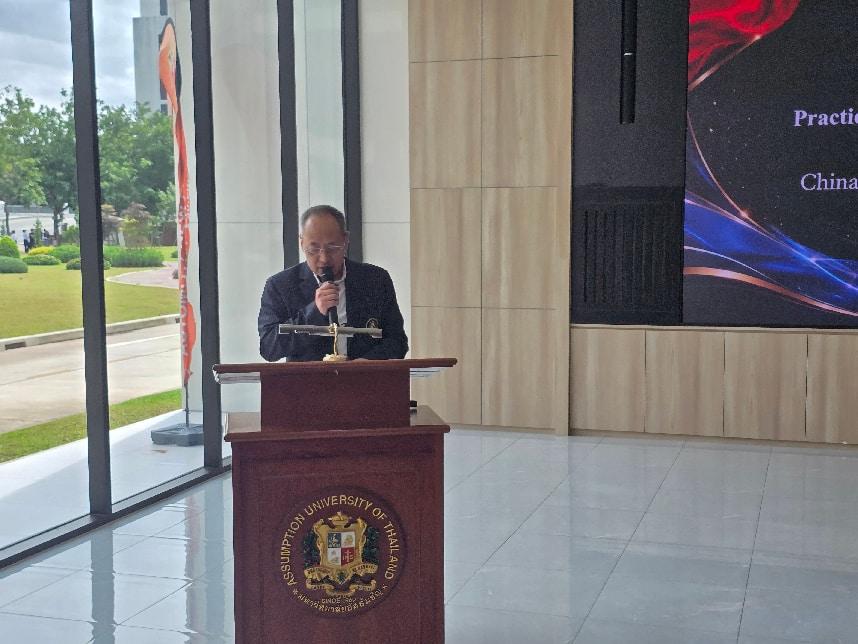
Address by a representative of Assumption University
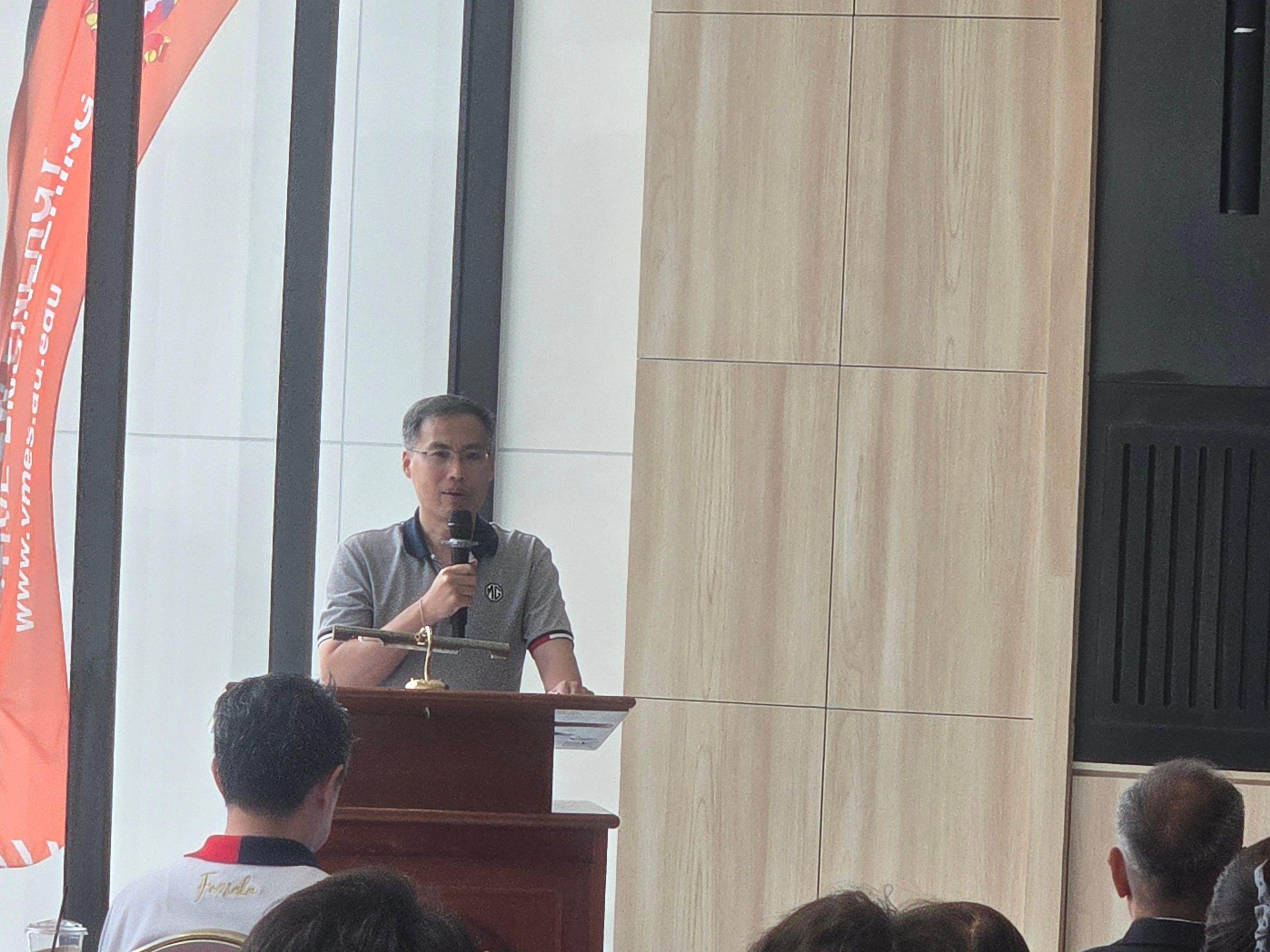
Address by a representative of the Chinauto Skills Center (MG)
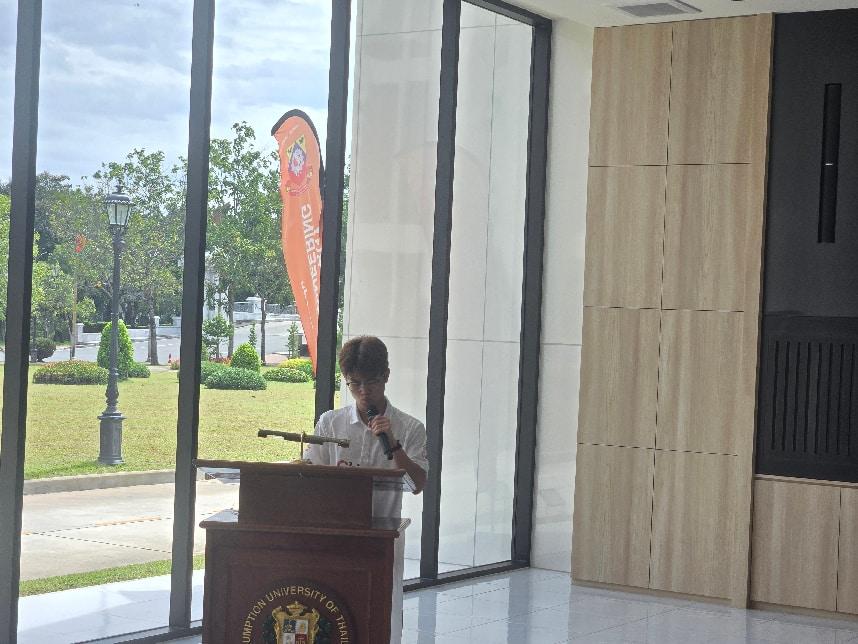
Remarks by a participant representative
Enterprise Mentors and Chinese-Thai Institutions Deliver Practice-Oriented Instruction
A joint teaching team from MG and partner institutions in China and Thailand delivered professional, scenario-based training. Closely aligned with new energy vehicle industry trends in Thailand and Southeast Asia, the second program focused on the core workforce needs of local vehicle enterprises, particularly inspection and repair as well as after-sales operation and maintenance. Its dedicated curriculum was refined to match frontline overseas work scenarios and occupational standards.
During the program, experienced MG instructors joined faculty members from Assumption University and partner Chinese institutions to form a dual-mentor teaching team. At Assumption University’s New Energy Vehicle Technology Research and Learning Center, they provided systematic instruction and intensive practice in new energy vehicle battery, motor, and electronic control systems; vehicle structure and operating principles; intelligent connected vehicle fundamentals; whole-vehicle fault diagnosis; and overseas after-sales operation and maintenance standards. Using the center’s full range of professional training equipment, participants completed extensive hands-on exercises modeled on authentic overseas dealership working conditions.
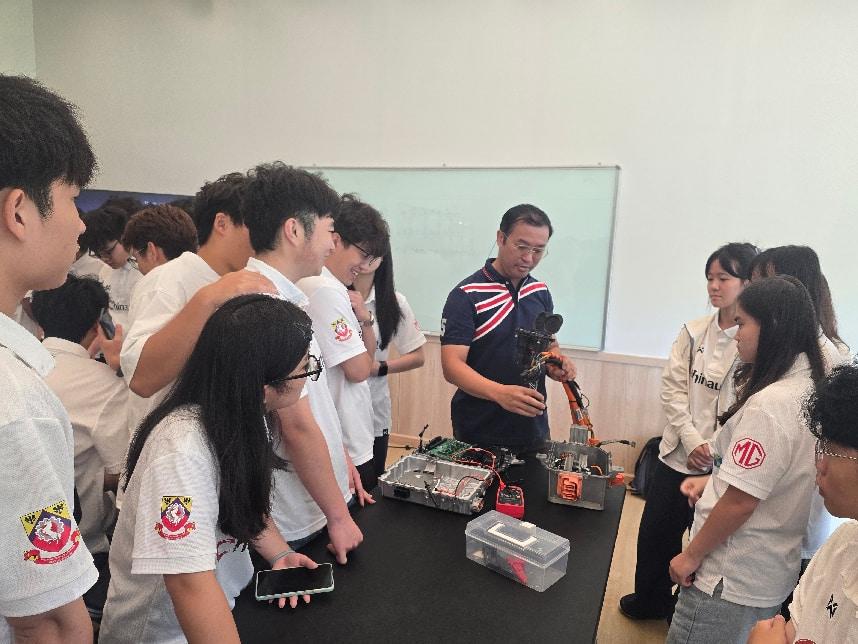
MG enterprise mentor teaching new energy vehicle systems at Assumption University
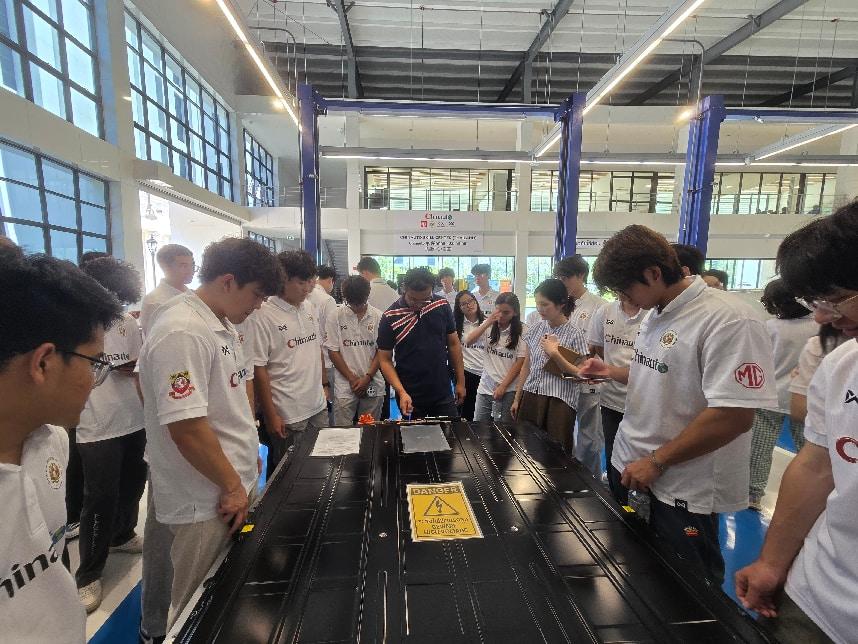
Participants completing hands-on exercises at an MG dealership
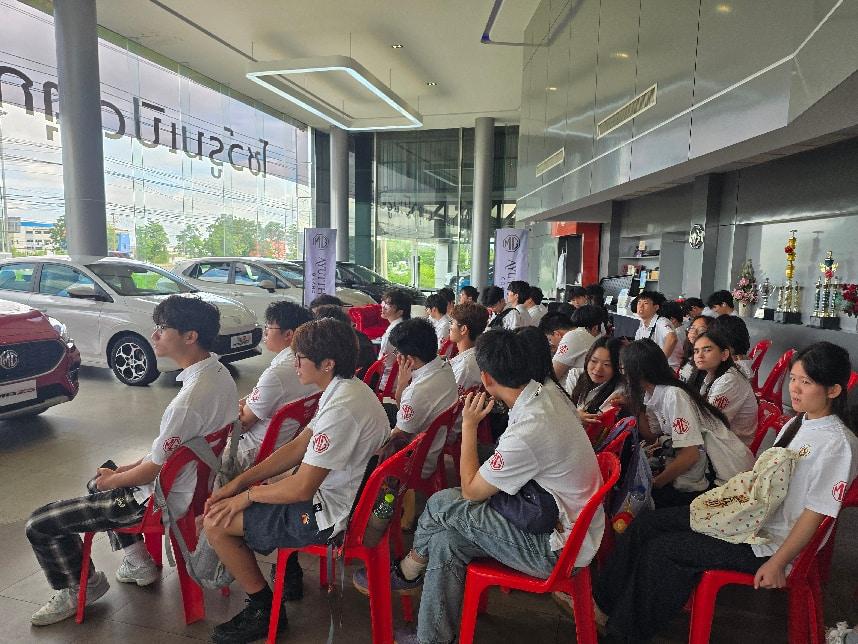
Participants attending practical training at an MG dealership
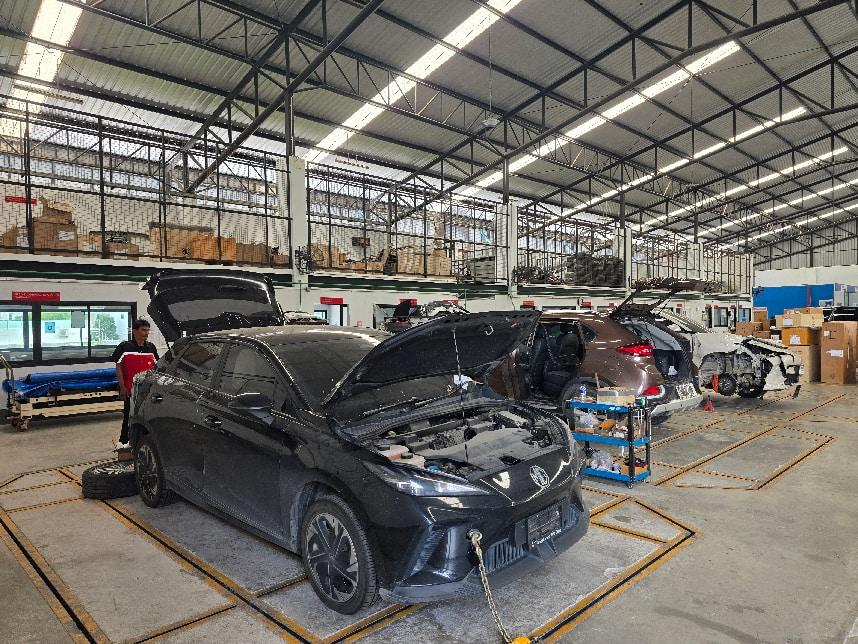
Participants training at an MG after-sales maintenance center
Learning in Thailand’s Automotive Industry
Participating students and faculty visited local industrial sites in Thailand for immersive, workplace-based learning. To bridge campus instruction and frontline overseas industry practice, the program continued its field-based training model, arranging structured visits to SAIC Motor-CP’s local facilities in Thailand, MG sales outlets, and after-sales service sites.
Participants observed and studied the full operational chain of a Chinese new energy vehicle brand in ASEAN, including regional production planning, supply chain management, retail sales and service, vehicle delivery inspection, and after-sales operation and maintenance. This allowed them to understand first-hand how Chinese automotive enterprises localize their overseas operations and ecosystems, integrate classroom knowledge with real industrial practice, and strengthen both professional competence and adaptability to international industry environments.
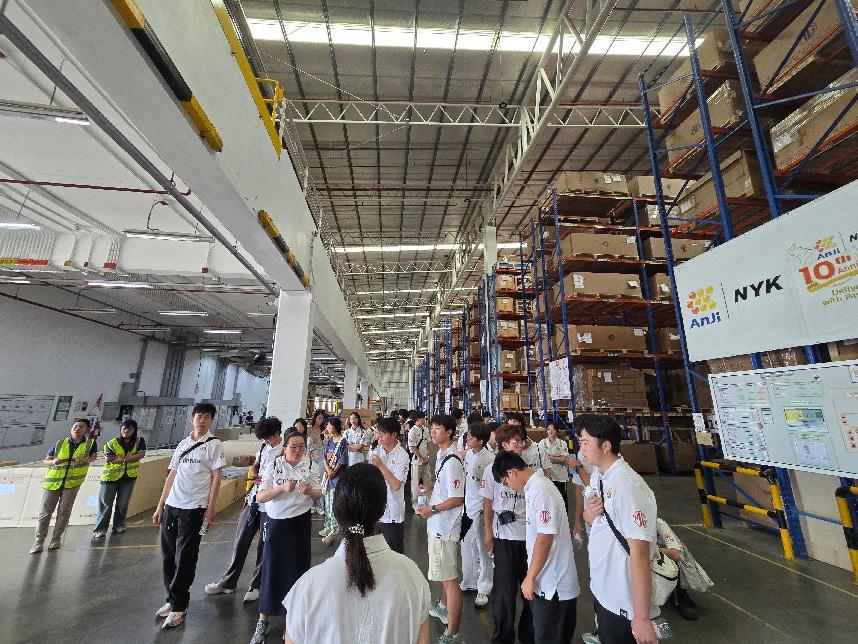
Participants at an MG logistics and warehousing center
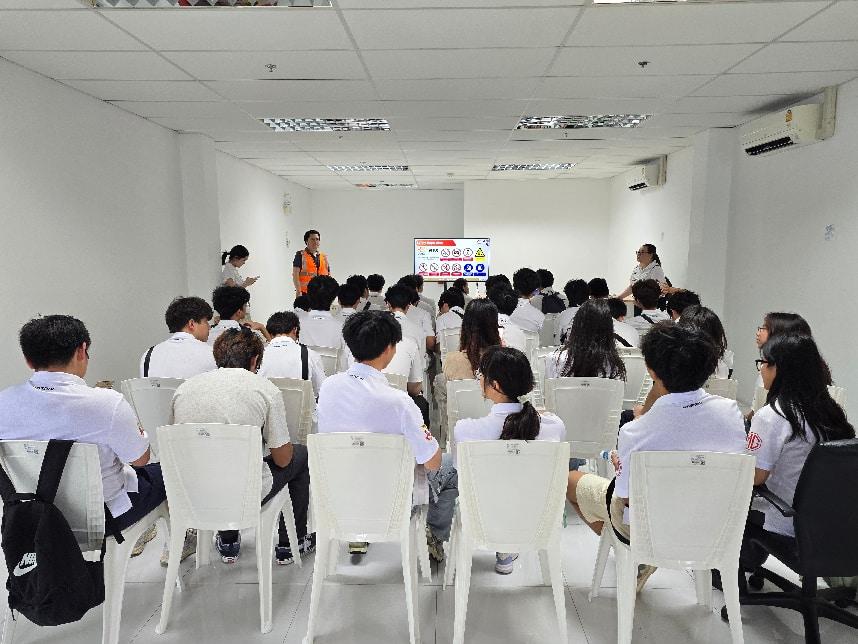
MG enterprise mentor delivering automotive logistics training
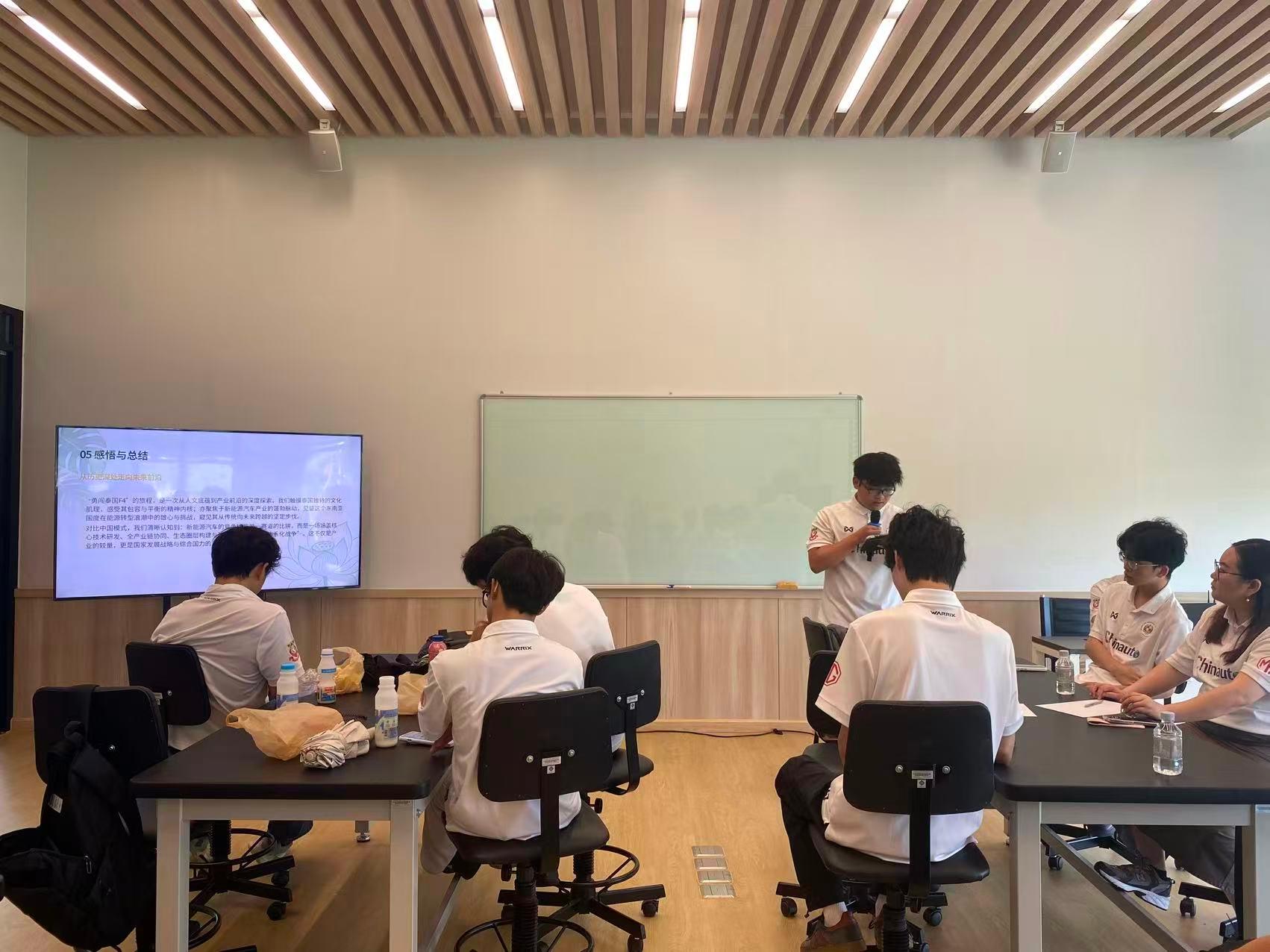
Group presentation and review session
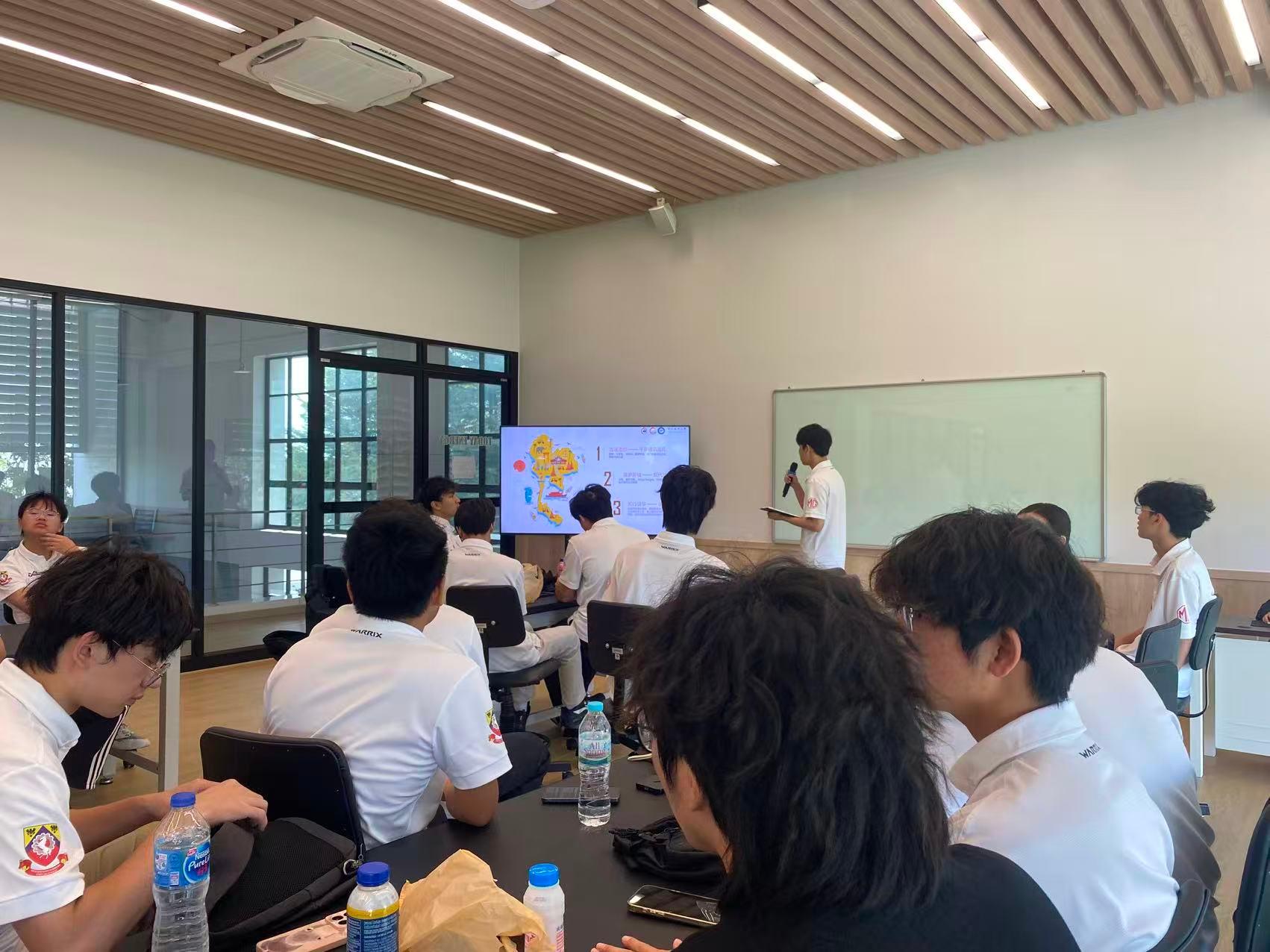
Participants reporting the outcomes of group work
Certificates, Recognition, and Pathways to Employment
The intensive 15-day program was well organized and highly productive. Participants studied diligently, practiced actively, and supported one another. In addition to acquiring core professional skills in new energy vehicle technology, they gained a deeper understanding of the Belt and Road principle of mutual benefit and developed a clearer perspective on the overseas expansion of Chinese automotive enterprises and the outlook for Southeast Asia’s new energy vehicle industry.
At the closing ceremony, representatives and guests from Chinese and Thai universities, enterprises, and partner organizations presented all participants with dedicated Chinauto practical training certificates. Outstanding participants were selected and recognized on the basis of classroom performance, hands-on assessments, and field-learning outcomes. High-performing participants may also receive targeted recommendations for internships and full-time employment with automotive enterprises in ASEAN, creating a complete progression from training to certification and employment.
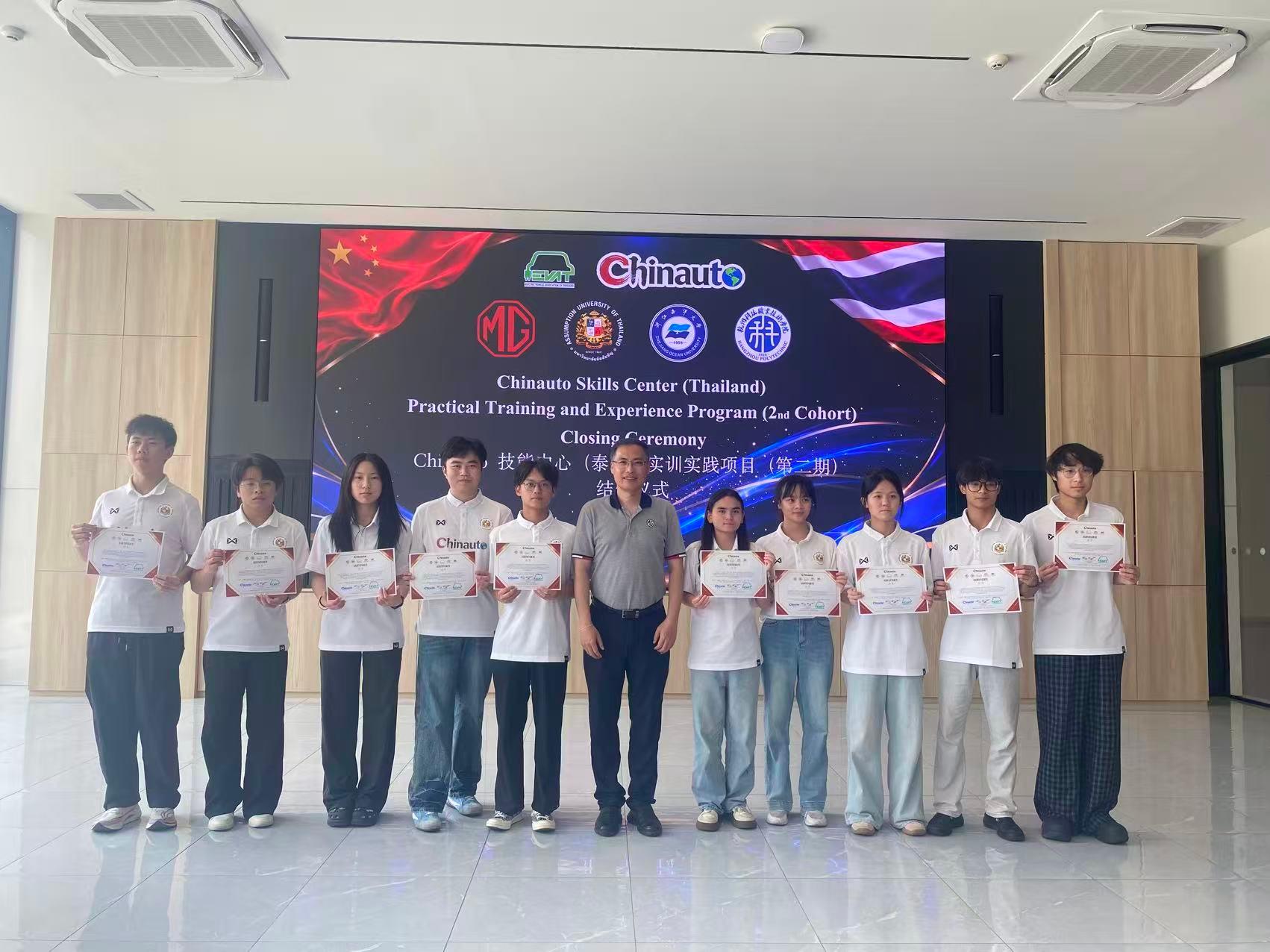
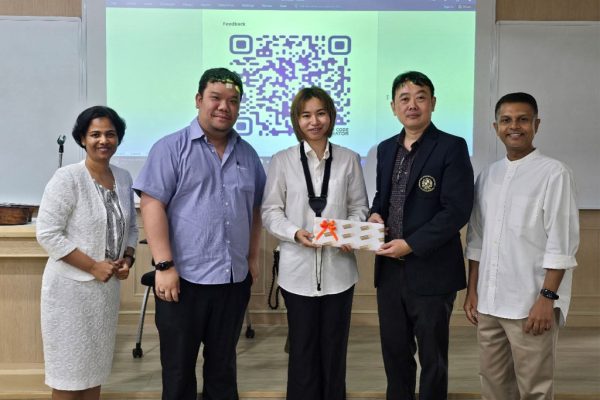
Presentation of completion certificates
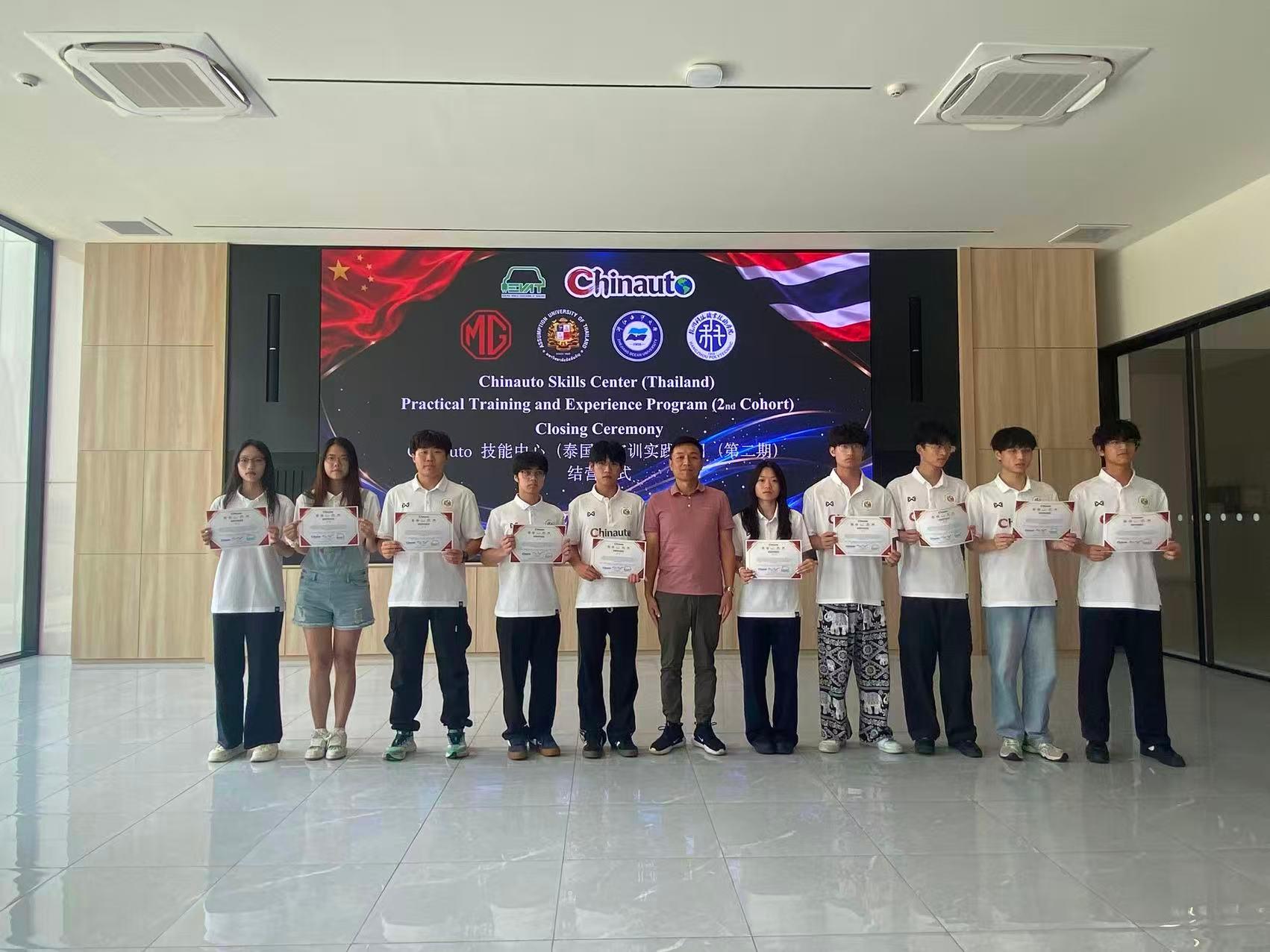
Participants receiving program certificates
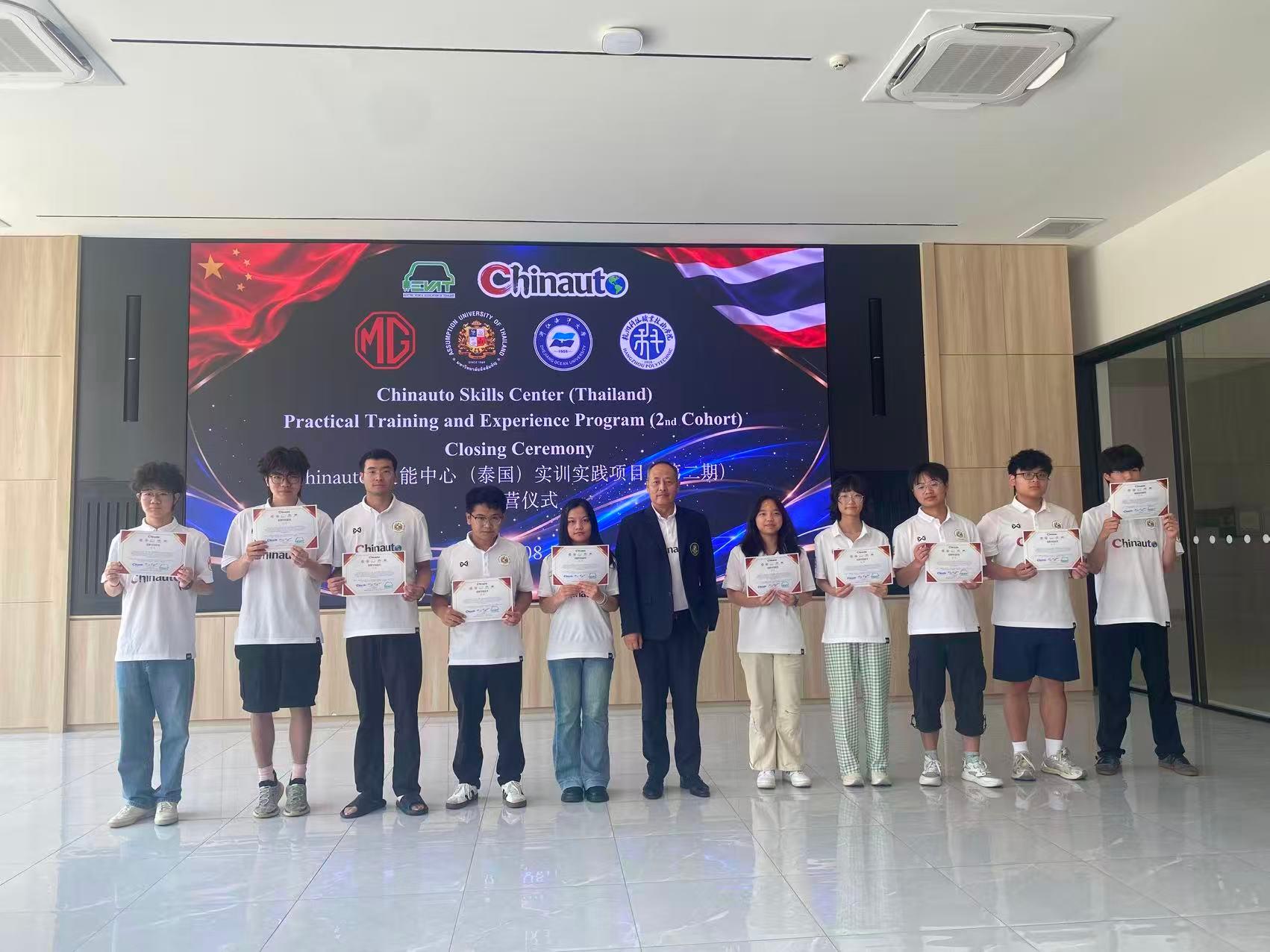
Recognition of program participants
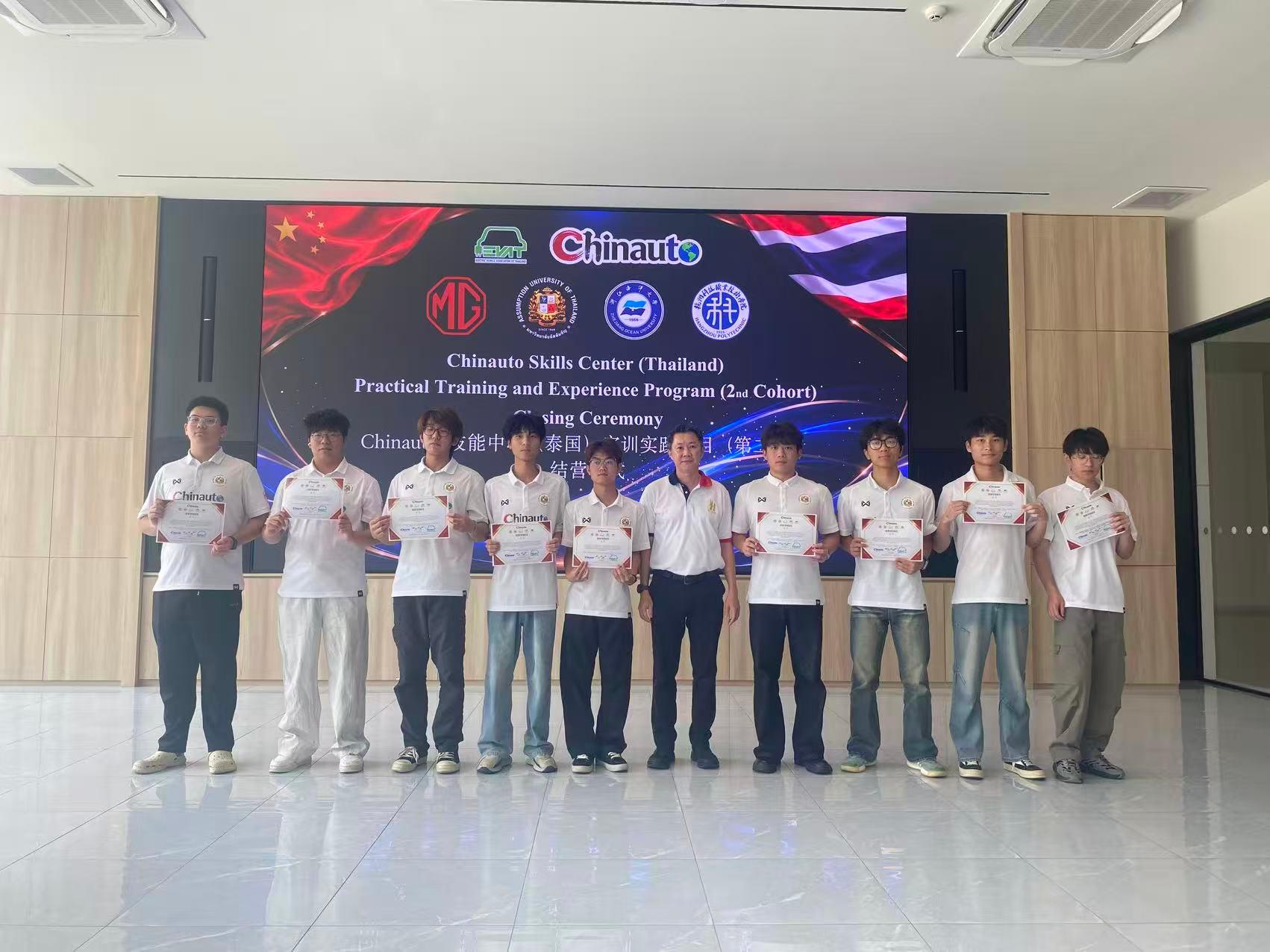
Closing ceremony group recognition
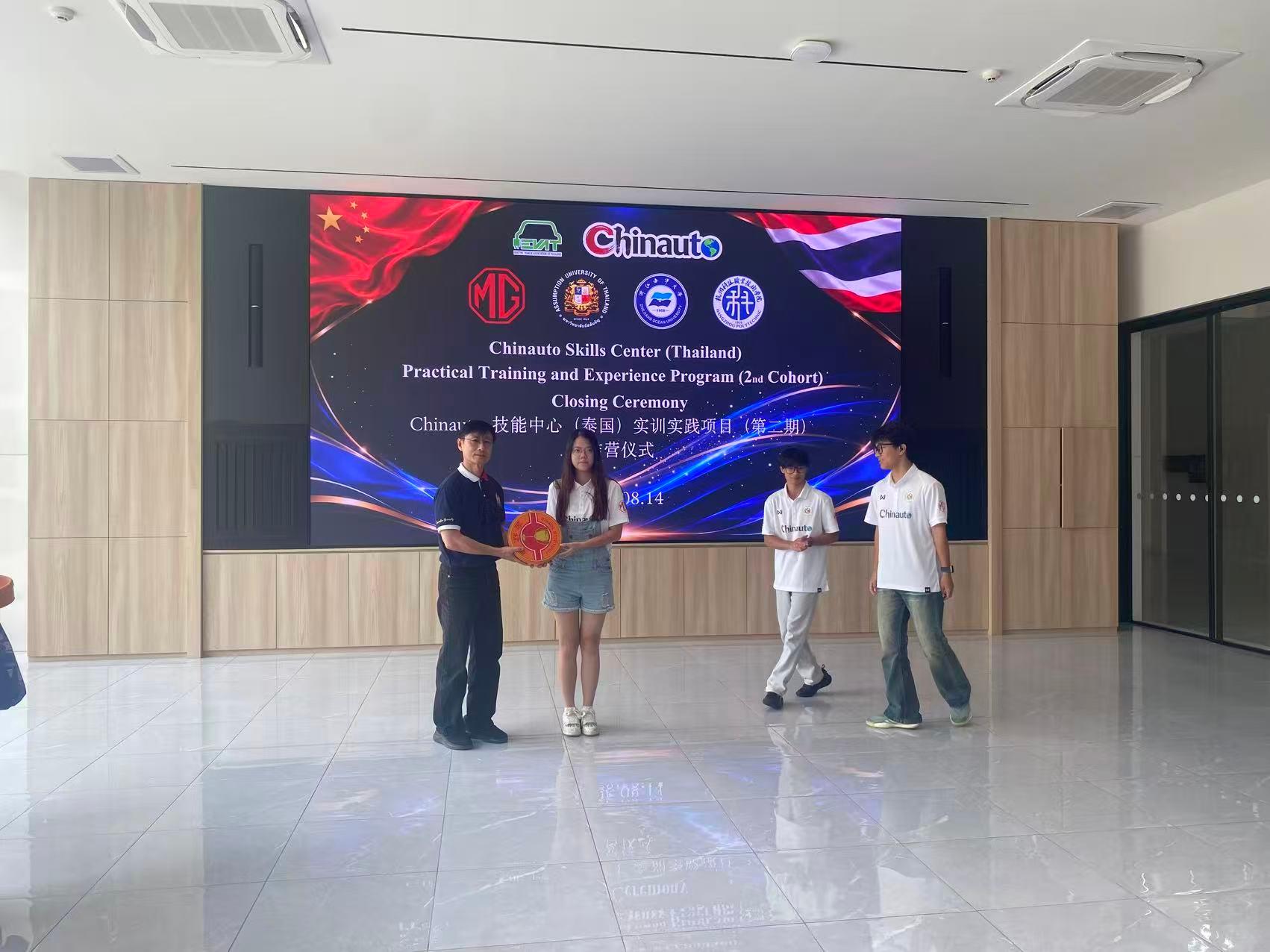
Presentation of recognition to outstanding participants
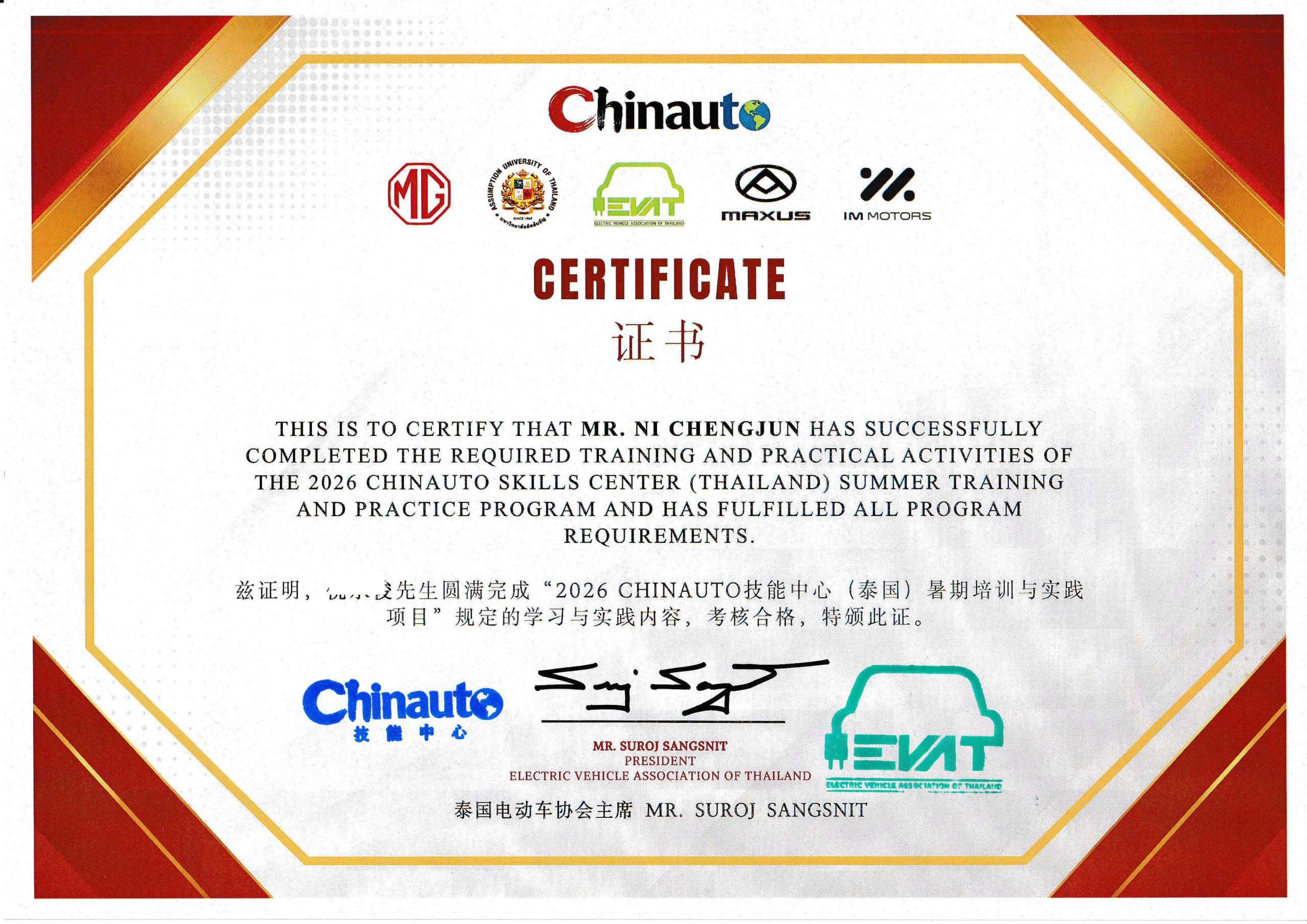
Chinauto Skills Center certificate
A Sustainable Model for Cross-Border Talent Development
The successful conclusion of the second practical training program marks a significant step in the China-Thailand cross-border industry-education integration model: from initial pilot validation to scaled, standardized, and regular implementation. Using the Chinauto Skills Center as a core overseas platform, Chinese and Thai institutions, leading automotive enterprises, and industry associations have deepened collaboration and established a complete talent development system based on university-enterprise cooperation, dual-mentor instruction, integration of learning and application, and employment pathways. This system directly addresses the shortage of internationally capable, highly skilled, multidisciplinary talent in Southeast Asia’s new energy vehicle industry.
Looking ahead, the partners will continue to deepen long-term strategic cooperation and improve sustained mechanisms for cross-border collaborative education. Regular cooperation will include skills training, faculty exchanges, joint curriculum development, and industry technology seminars. By sharing mature Chinese automotive vocational education standards and practice-oriented training systems, the initiative will support the international development of industry through vocational education and cultivate more new energy vehicle professionals with strong practical ability, intercultural communication skills, and an international outlook. It will further strengthen cultural, educational, and industrial connectivity between China and Thailand under the Belt and Road Initiative and provide sustained talent support for the high-quality, sustainable development of Southeast Asia’s new energy vehicle industry.
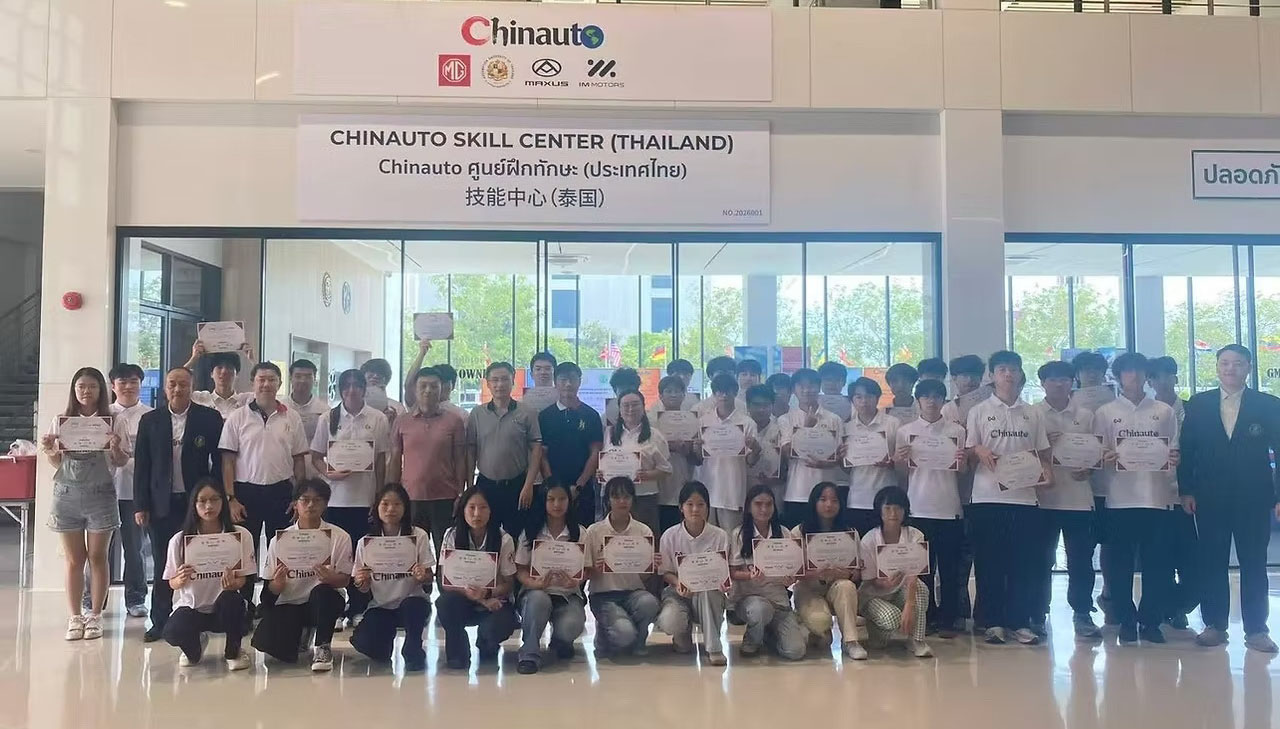
Group photo marking the successful conclusion of the second practical training program
WRITER : ASSUMPTION UNIVERSITY OF THAILAND
More Information about Office of Graduate Studies, please visit:
Website: https://www.grad.au.edu/ , http://tcic.au.edu/, https://ci.au.edu/
Facebook: https://www.facebook.com/abacgraduate/
Instagram: www.instagram.com/au_grad_studies
Twitter: https://twitter.com/AbacGrad
E-mail: grad@au.edu
Tel: (+66)-2783-2222 Ext.1360-61