






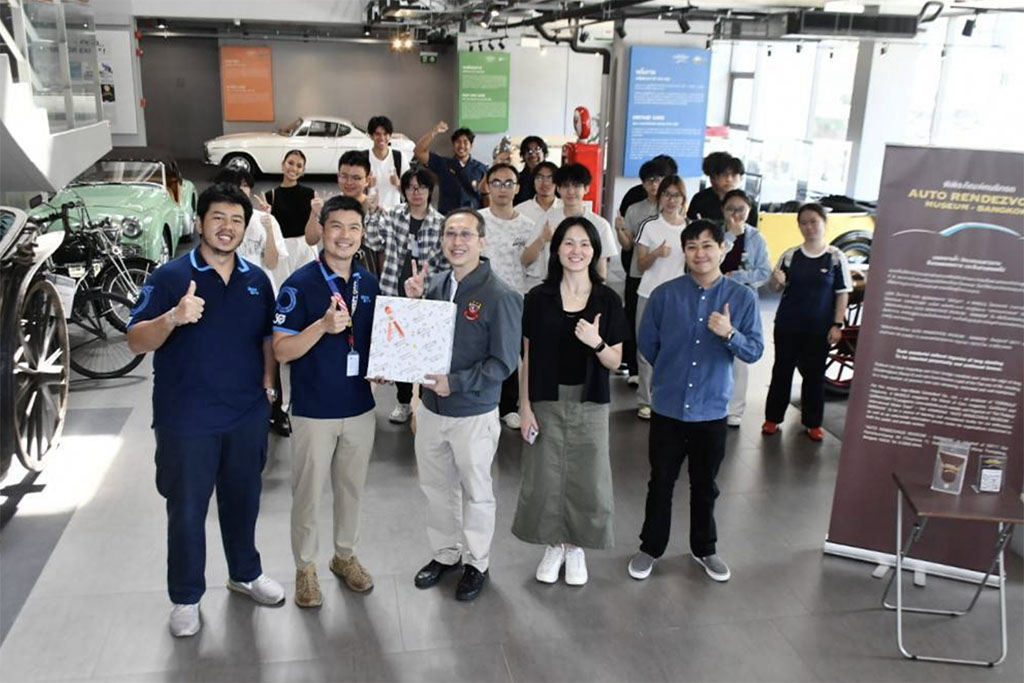
Students explored automotive history at Bangkok’s Auto Rendezvous Museum, connecting classic engineering with electric mobility.
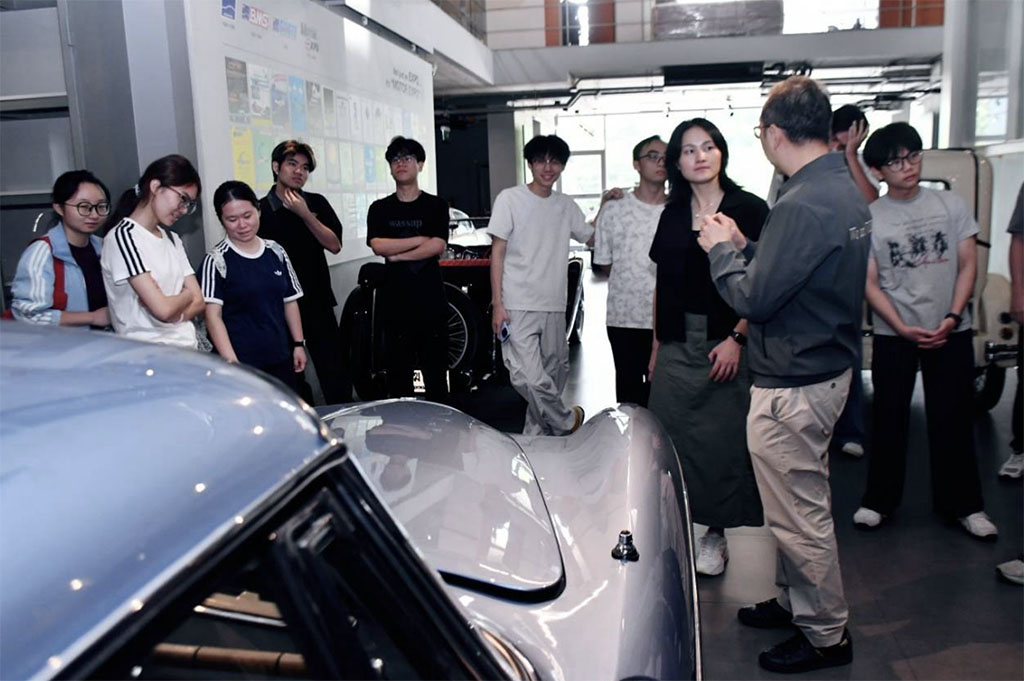
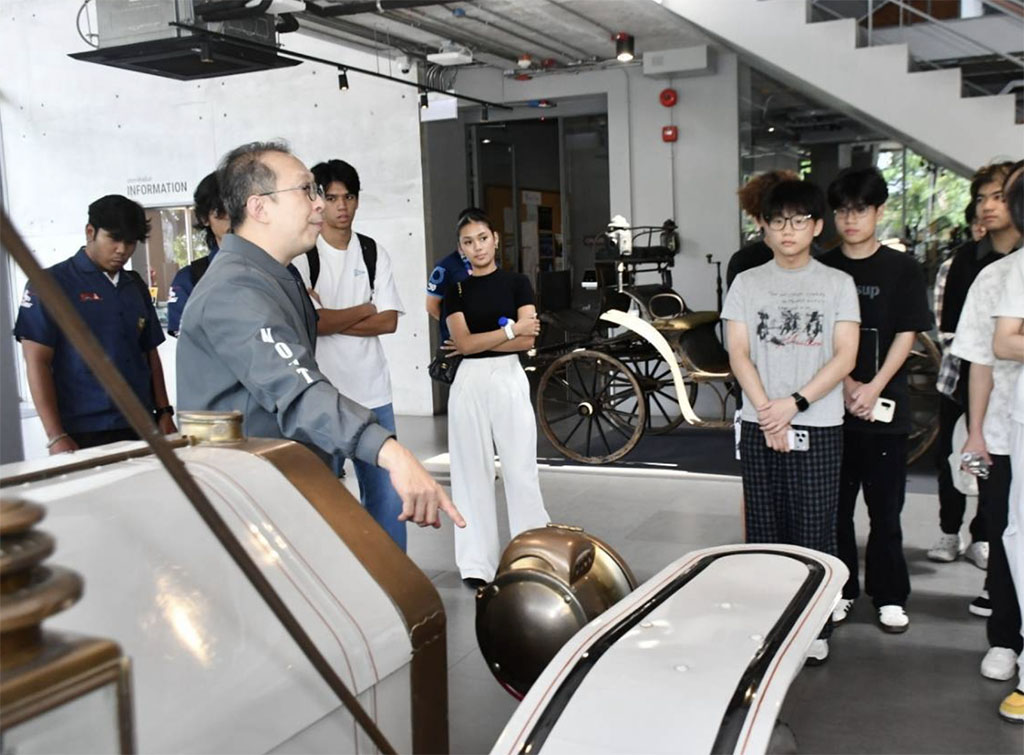
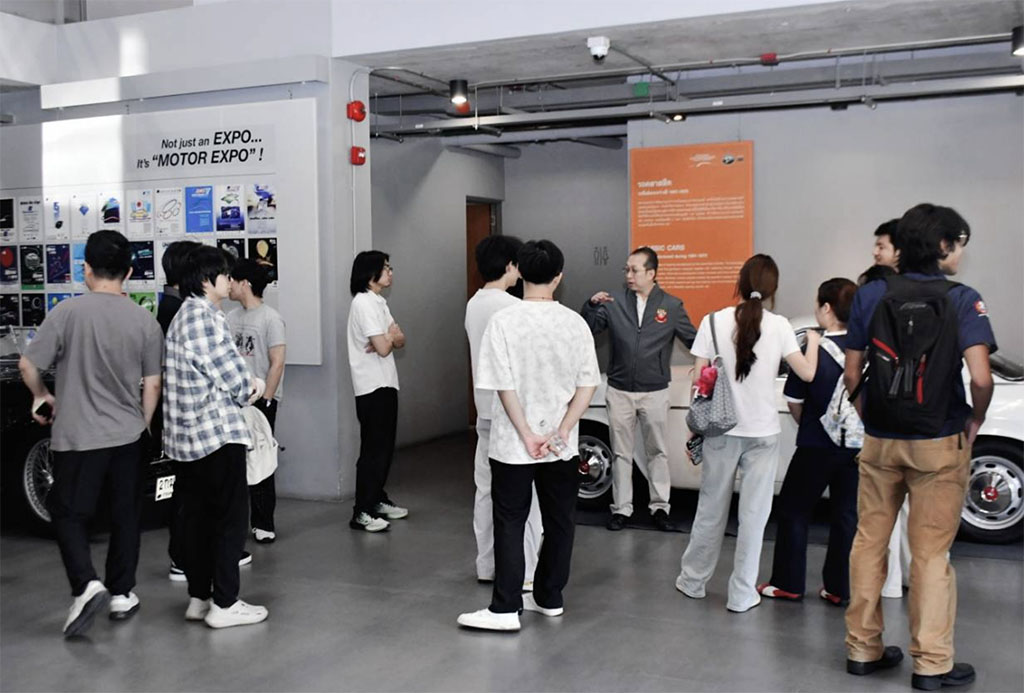
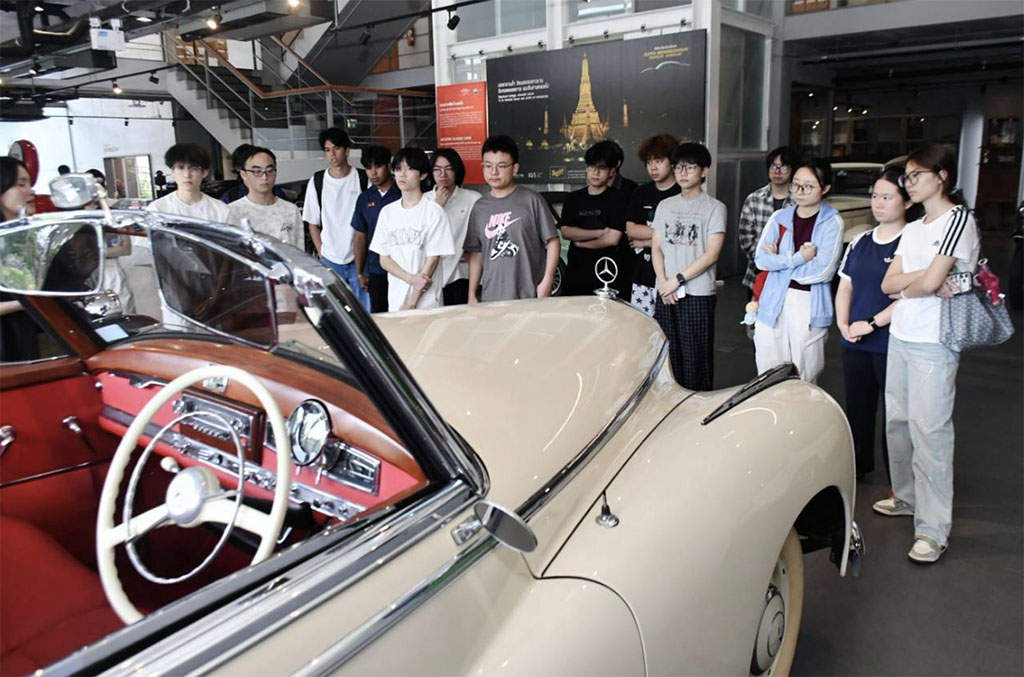
The future of automotive engineering has much to learn from the past. Students from the New Energy Automotive Engineering (NEA) program at Assumption University of Thailand discovered that connection during an educational visit to Bangkok’s Auto Rendezvous Museum, where more than a century of automotive development offered a fresh perspective on the technologies shaping tomorrow’s vehicles.
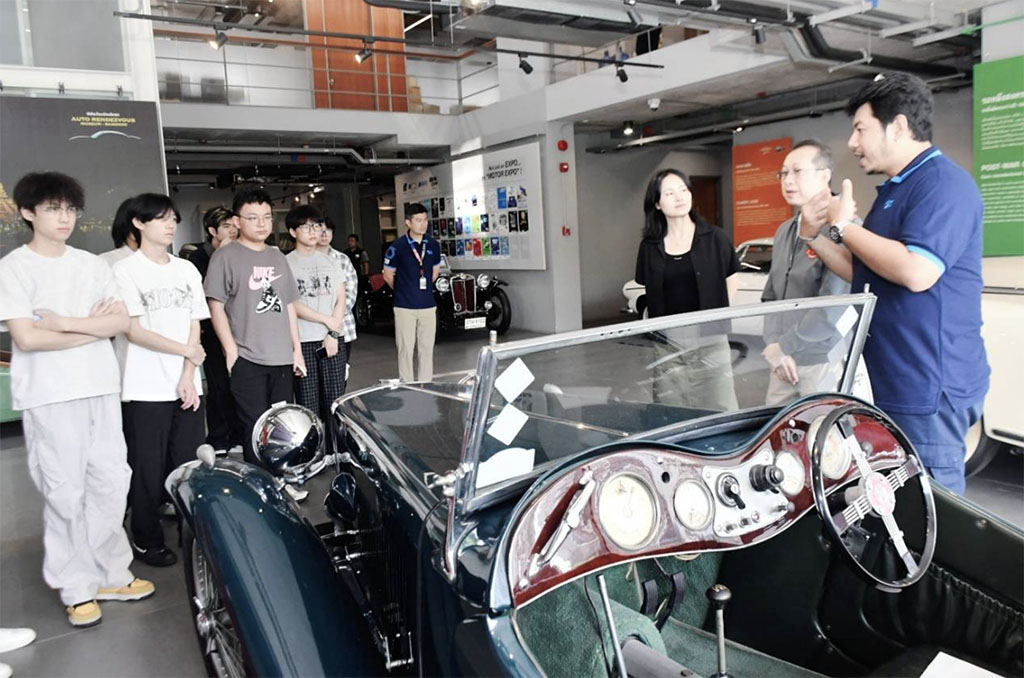
The visit was led by Asst. Prof. Dr. Narong Aphiratsakun, Dean of the Vincent Mary School of Engineering, Science and Technology, and brought together students from AU’s SIMBA program for an opportunity to explore automotive history beyond the classroom.
A Museum Built for Car Lovers
Located in Bangkok’s Wang Thonglang district, Auto Rendezvous Museum-Bangkok was developed by IMC International Media Co., Ltd., the company associated with Thailand’s Motor Expo and automotive publications.
The museum was conceived by Kwanchai Paphatphong, chairman of IMC and a prominent figure in Thailand’s vintage automobile community, as a meeting place for automobile enthusiasts and a center for preserving automotive history.
Supported by the Vintage Car Club of Thailand, the museum presents seven historical categories of vehicles, following classifications established by the Fédération Internationale des Véhicules Anciens (FIVA). These range from pioneering automobiles manufactured before 1905 to vintage, prewar, postwar, classic and modern classic vehicles.
The collection offers visitors an opportunity to see how vehicle engineering, styling, safety, comfort and performance developed across generations.
Engineering Lessons from the Past
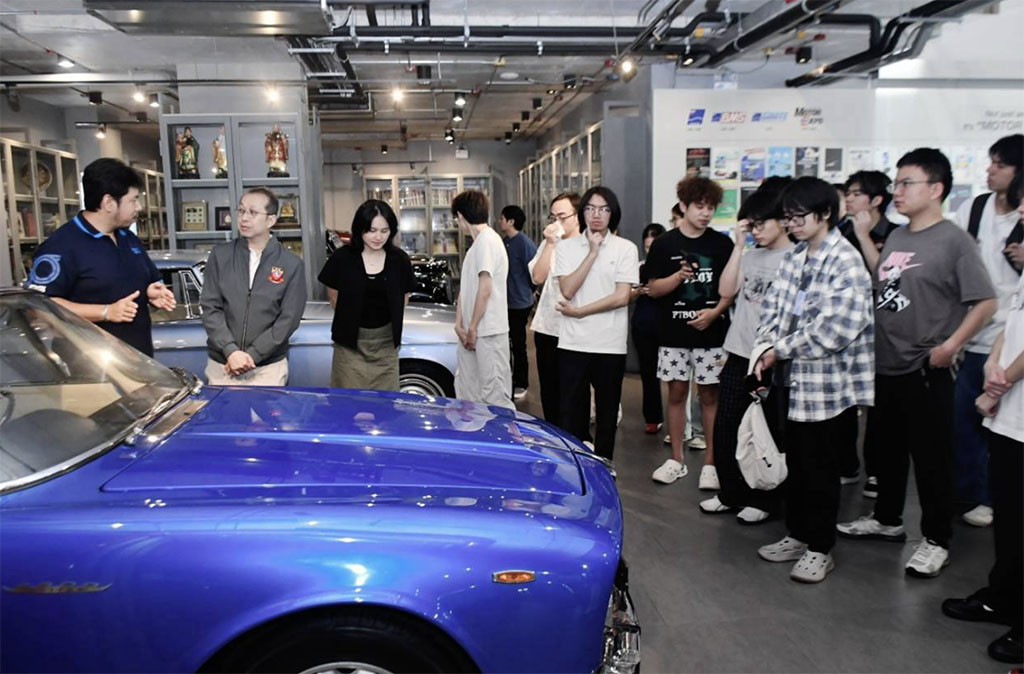
During the visit, AU students examined automobiles representing different periods of automotive history. They studied vehicle bodies, cockpit configurations, dashboard instruments and distinctive mechanical and design features while listening to explanations from museum representatives.
Rather than viewing the vehicles simply as historical exhibits, students were encouraged to consider the engineering decisions behind their development.
Changes in body construction, driver controls, passenger comfort and vehicle performance provided practical examples of how engineering responded to technological progress and changing consumer expectations.
The museum experience also demonstrated that innovation rarely happens in isolation. Many of the challenges facing today’s automotive engineers, including efficiency, safety, reliability and driver experience, have occupied vehicle designers for generations.
Connecting Automotive Heritage with Electric Mobility
For students specializing in New Energy Automotive Engineering, the visit offered an important historical perspective on the transition from conventional internal combustion engines to hybrid and electric vehicles.
AU’s Bachelor of Engineering program combines mechanical, electrical, computer, energy and automotive engineering. Its curriculum includes vehicle structure, automotive electrical systems, electric drive technology, energy storage, battery management and vehicle inspection.
Observing earlier generations of automobiles helped students place those contemporary subjects within the broader story of automotive development.
The museum visit also complemented AU’s growing emphasis on electric vehicle education and professional training. Through collaborations with automotive industry organizations and manufacturers, the University has expanded opportunities for students to engage with new energy vehicle technologies and the skills required by Thailand’s changing automotive industry.
Learning Beyond the Classroom
The activity reflected the applied learning approach of AU’s SIMBA program, which combines undergraduate studies with an accelerated pathway to postgraduate education.
By bringing students into direct contact with historical vehicles and automotive professionals, the visit provided an additional dimension to their technical education.
From the earliest automobiles to today’s battery-powered vehicles, the underlying challenge remains the same: using engineering knowledge and creative thinking to make transportation safer, more efficient and better suited to people’s needs.
The museum visit reminded AU’s future automotive engineers that understanding where the industry has been is an important part of deciding where it should go next.
WRITER: THE AU LIBRARY
More Information about Office of Graduate Studies, please visit:
Website: https://www.grad.au.edu/ , http://tcic.au.edu/, https://ci.au.edu/
Facebook: https://www.facebook.com/abacgraduate/
Instagram: www.instagram.com/au_grad_studies
Twitter: https://twitter.com/AbacGrad
E-mail: grad@au.edu
Tel: (+66)-2783-2222 Ext.1360-61