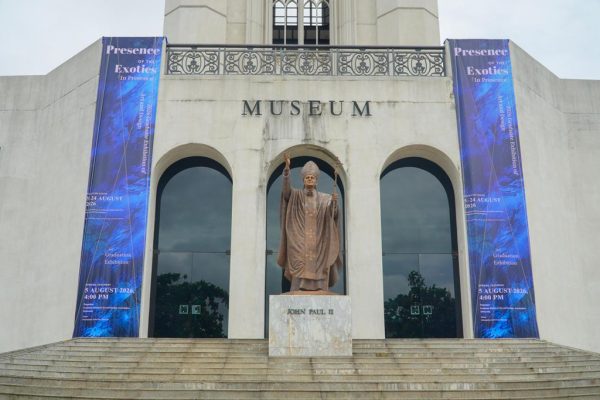







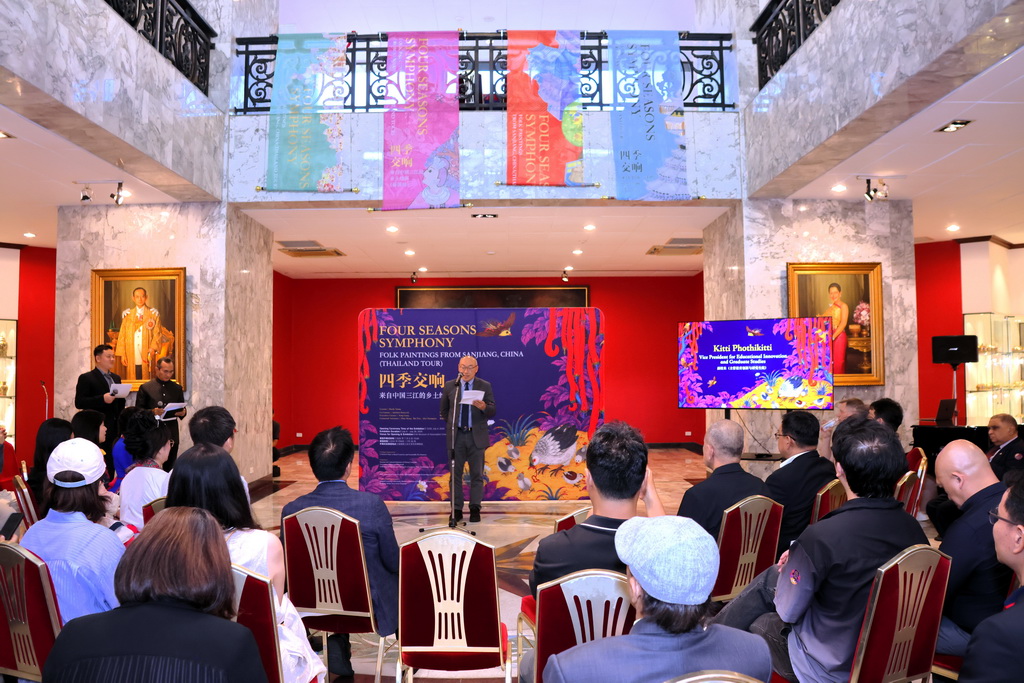
On July 6, 2026, the opening ceremony of the Thailand stop of the international touring exhibition “Symphony of the Four Seasons: Rural Paintings from Sanjiang, China” was held at the Museum of the Suvarnabhumi Campus of Assumption University of Thailand (AU).
The exhibition is a flagship program of “Encountering the East: Peking University’s Intangible Cultural Heritage Preservation and Innovation Initiative” and has also been included as one of the key cultural exchange activities commemorating the 50th anniversary of diplomatic relations between China and Thailand.
Organized around the changing seasons, the exhibition presents outstanding rural paintings created by four generations of Dong ethnic artists—from senior masters to young children—in Sanjiang Dong Autonomous County, Guangxi, China. Through vibrant colors and expressive brushwork, the artworks portray the rhythm of life in the Dong villages—from the renewal of spring and flourishing summer to the harvest of autumn and the quiet preservation of winter. More importantly, they provide a new platform for intercultural dialogue between China and Thailand through the language of folk art and intangible cultural heritage.
The exhibition is held under the guidance of the UNESCO Chair on Rural Creative and Sustainable Development and is jointly organized by the Institute for Cultural Industries of Peking University, Assumption University of Thailand, and the Federation of Literary and Art Circles of Sanjiang Dong Autonomous County.
Supporting organizations include the Laboratory for Cultural Technology and Social Innovation at AU and the Office of Overseas Communication of Peking University. The exhibition is undertaken by the Digital Creative Laboratory of the Institute of Advanced Information Technology, Peking University, together with the Sanjiang Artists Association of Guangxi.
In addition to the exhibition itself, a series of accompanying activities has been arranged, including:
- the opening ceremony,
- curator-led gallery tours,
- the China–Thailand Youth Art Salon,
- a showcase of Dong-inspired cultural and creative products, and
- an interactive intangible cultural heritage painting workshop.
Together, these activities present the artistic value of Sanjiang rural paintings from multiple perspectives, enabling Thai faculty members, students, and members of the public to gain a deeper understanding of contemporary China’s rural revitalization efforts and the rich cultural heritage of the Dong ethnic community.
Opening Ceremony: Painting a New Chapter of China–Thailand Cultural Cooperation
The exhibition officially opened on the afternoon of July 6, 2026.
In his welcoming remarks, Asst. Prof. Dr. Kitti Phothikitti, Vice President for Educational Innovation and Graduate Studies of AU, emphasized that art serves as a universal language capable of transcending linguistic and cultural boundaries. It is not only a powerful medium for communication among peoples but also an important bridge for promoting mutual learning among civilizations and strengthening bilateral friendship.
He noted that the rural paintings of Sanjiang vividly portray the traditional lifestyle, architectural heritage, and centuries-old cultural traditions of the Dong people in Guangxi. The artworks embody the profound legacy of China’s outstanding traditional culture while illustrating the vitality of contemporary rural cultural revitalization.
Asst. Prof. Dr. Kitti also highlighted AU’s long-standing commitment to international education and its continuous efforts to expand sustainable partnerships with Chinese universities and cultural institutions. He described the exhibition as another milestone in the university’s growing collaboration with Peking University and an important achievement in advancing people-to-people exchanges between China and Thailand.
Expressing gratitude to the curatorial team from Peking University, the participating artists from Sanjiang, and all those involved in organizing the exhibition, he expressed hope that the event would inspire students and faculty to gain a deeper appreciation of Chinese folk aesthetics and further strengthen friendship between the younger generations of the two countries.
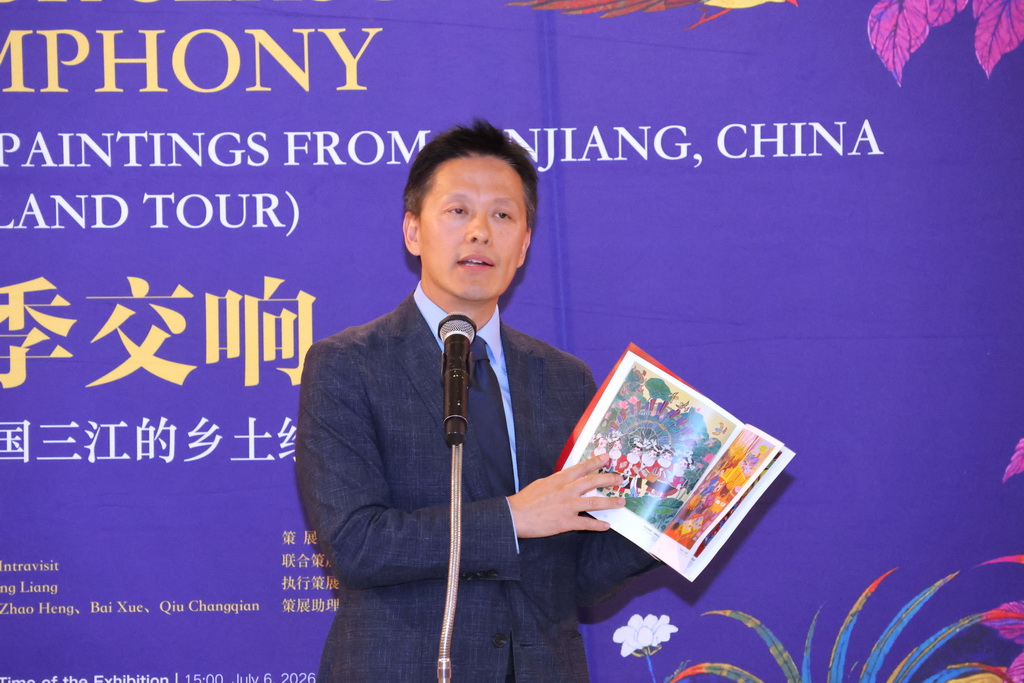
Professor Xiang Yong, Dean of the Institute for Cultural Industries at Peking University and Chief Curator of the exhibition, explained the inspiration behind the project by reflecting on his extensive field research in Dong villages over the years.
He observed that the cycle of the four seasons is a universal human experience, while every culture has developed its own distinctive aesthetic interpretation of seasonal life. The significance of Sanjiang rural paintings extends far beyond artistic techniques; they serve as a vivid embodiment of cultural confidence in China’s rural communities in the new era.
Professor Xiang also explained the conceptual shift from the term “farmer paintings” to “rural paintings.” The new terminology reflects a broader cultural perspective, recognizing this art form not merely as folk painting created by farmers but as an important expression of rural civilization rooted deeply in local communities and everyday life.
Reviewing the longstanding academic cooperation between Peking University and Assumption University of Thailand, he noted that this international exhibition is the natural outcome of years of mutual trust and shared cultural aspirations. Looking ahead, he expressed hope that both institutions would further expand collaboration in areas such as rural creativity, sustainable development, and international artistic exchange.
Professor Chen Yuqiu, Chair of the Sanjiang Artists Association, introduced the cultural heritage of Sanjiang and the historical development of Dong rural painting.
Sanjiang is the only Dong Autonomous County in Guangxi and is home to one of China’s largest Dong populations. The county has earned national and international recognition as the “World Home of Drum Towers and Wind-and-Rain Bridges” and the “Hometown of Chinese Folk Arts.”
The artistic tradition of Dong painting can be traced back to the painted decorative culture of the ancient Baiyue people during the late Neolithic period. Organized contemporary creation began in the 1970s, and in 2012 the art form was officially inscribed on the Intangible Cultural Heritage List of Guangxi Zhuang Autonomous Region.
Characterized by full compositions, bold forms, vivid colors, and distinctive ethnic visual language, Sanjiang rural paintings have developed into a unique artistic tradition. Through decades of cultivation, Sanjiang has established an integrated talent development system encompassing village-based creative studios, school art education, and university partnerships, nurturing artists from four generations.
As the exhibition marks the first appearance of Sanjiang rural paintings in Thailand, Professor Chen warmly invited Thai audiences to visit Sanjiang in person to experience the authentic traditions, customs, and cultural landscape of the Dong people.
Following the speeches, Professor Xiang Yong presented an original Dong painting to AU on behalf of the curatorial team as a commemorative gift.
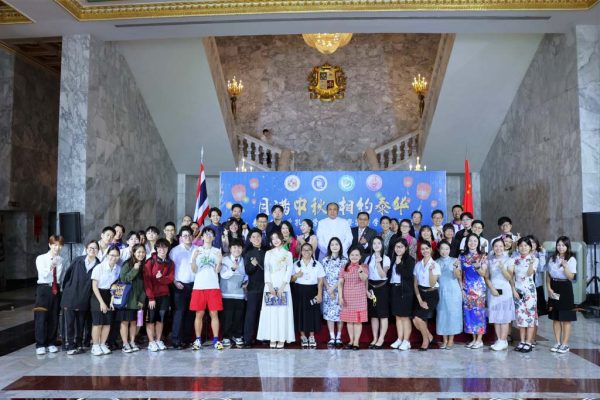
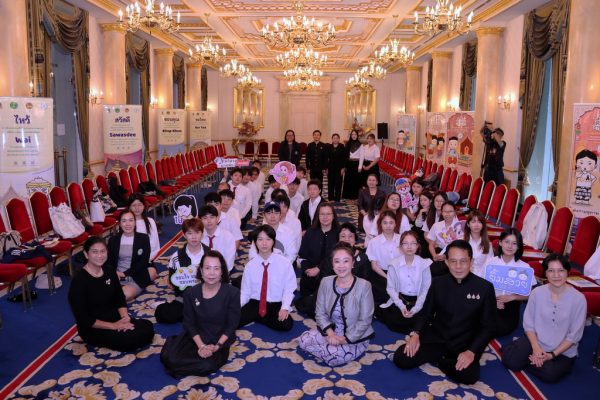
Distinguished guests from China and Thailand then jointly officiated the ribbon-cutting ceremony, marking the official opening of the exhibition. Faculty members, students, artists, and visitors gathered to witness this memorable occasion, celebrating a new milestone in cultural exchange between the two countries.
Guided Tour: Discovering the Living Spirit of Dong Villages Through Art
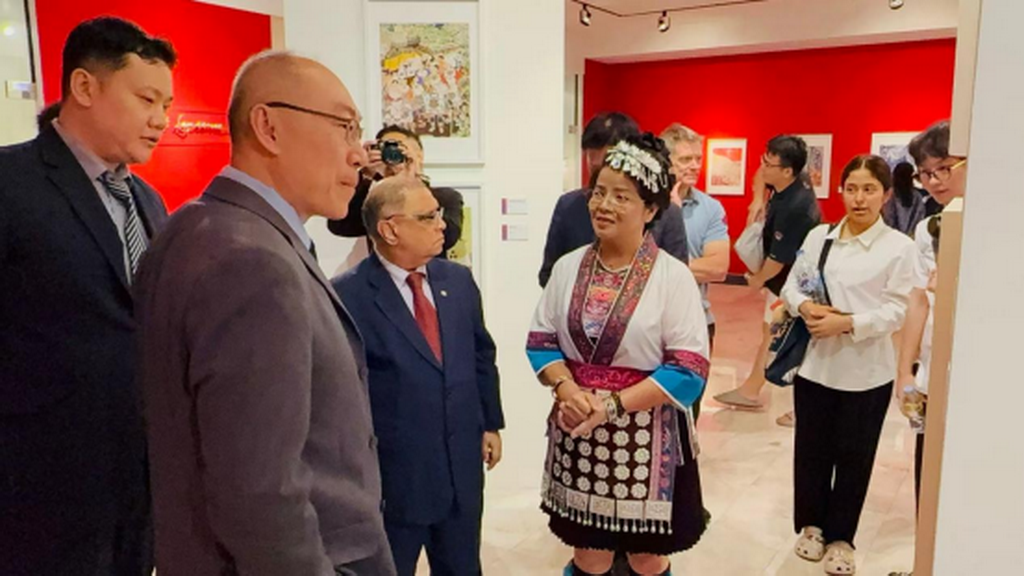
Following the opening ceremony, Professor Chen Yuqiu led a special guided tour of the exhibition for distinguished guests, faculty members, and students from Thailand. Through detailed interpretations of individual artworks, she introduced the stories, traditions, and cultural meanings embodied in each painting.
Scenes of festive bullfighting competitions, the iconic Dong Drum Towers, and traditional decorative motifs inspired by Dong embroidery vividly illustrated the everyday lives, customs, and cultural heritage of the Dong people. Each artwork served as a visual narrative, revealing the close relationship between nature, community, and cultural identity in Dong villages.
Professor Xiang Yong further complemented the tour by explaining the historical background of Dong rural painting and the deeper cultural logic behind its development. His commentary enabled international audiences to appreciate not only the artistic techniques but also the values, memories, and collective experiences embedded within the paintings.
Rooted in the agricultural life of local communities, Sanjiang rural paintings are distinguished by their simplicity, sincerity, and powerful visual expression. While remaining firmly grounded in traditional Dong culture, contemporary artists have also embraced modern artistic perspectives, creating a distinctive style in which inherited traditions and contemporary creativity coexist harmoniously.
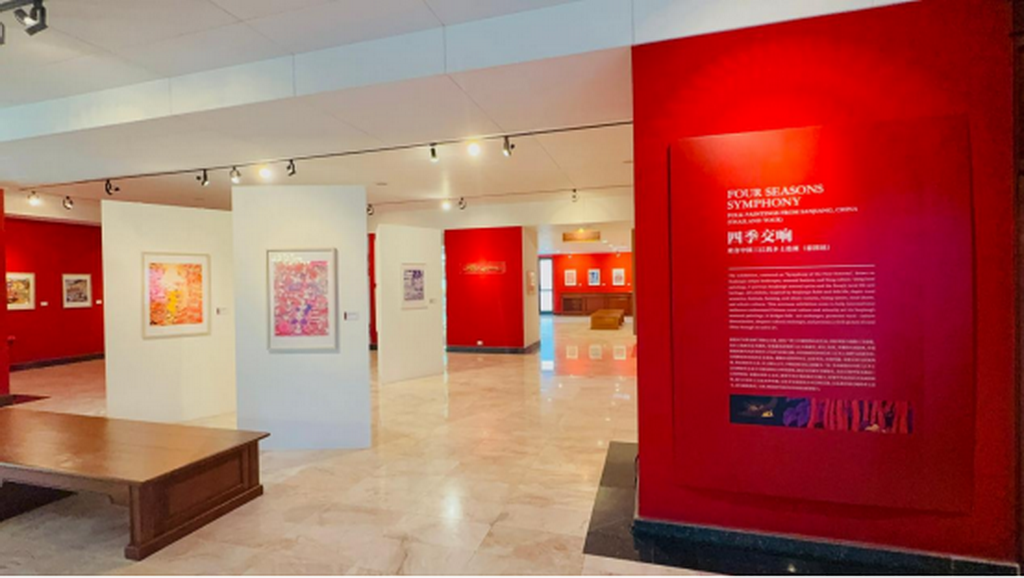
The exhibition adopts an immersive display approach, presenting the artworks without conventional barriers or enclosed display cases. This design encourages visitors to engage with the paintings at close range, reducing the sense of distance often associated with cross-cultural appreciation.
Depictions of spring planting, autumn harvests, Lusheng dance celebrations, village festivals, and everyday rural life resonated strongly with Thai audiences. Although originating from different cultural backgrounds, visitors found familiar emotions in the universal themes of family, community, celebration, and harmony with nature.
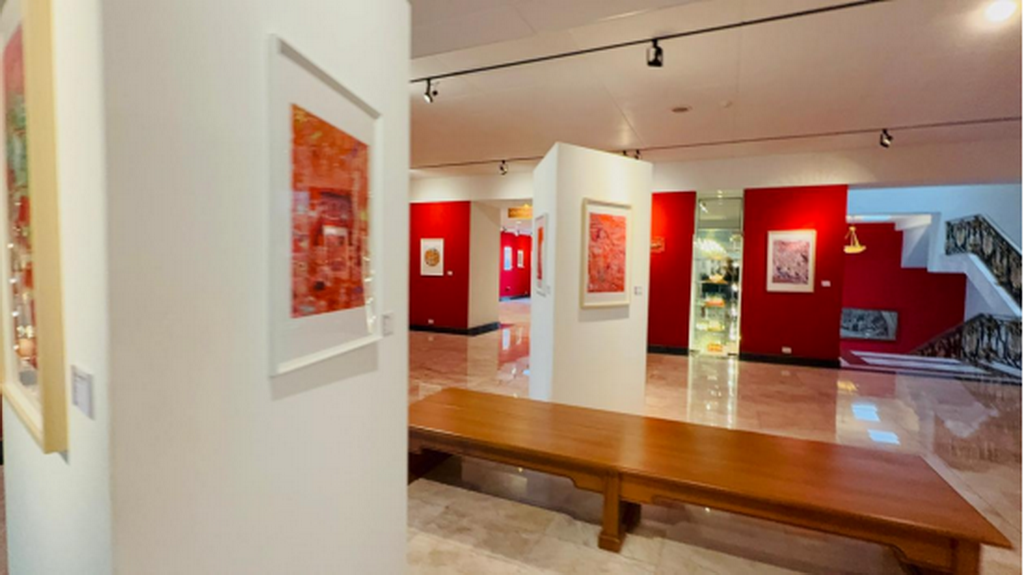
Cultural and Creative Design: Bringing the Aesthetics of Dong Villages into Everyday Life
Beyond the exhibition itself, visitors were invited to explore a specially curated collection of cultural and creative products inspired by Sanjiang rural paintings.
Designer Fu Yueying transformed the visual language of Dong painting into a series of original lifestyle products, including silk scarves, traditional Chinese folding fans, canvas tote bags, themed postcards, and ceramic coasters.
Drawing inspiration from the vivid colors, expressive compositions, and playful artistic forms characteristic of Dong painting, the designs faithfully preserve the visual identity of the original artworks while adapting them into practical objects for everyday use. Through this creative transformation, intangible cultural heritage extends beyond the gallery, becoming part of contemporary daily life.
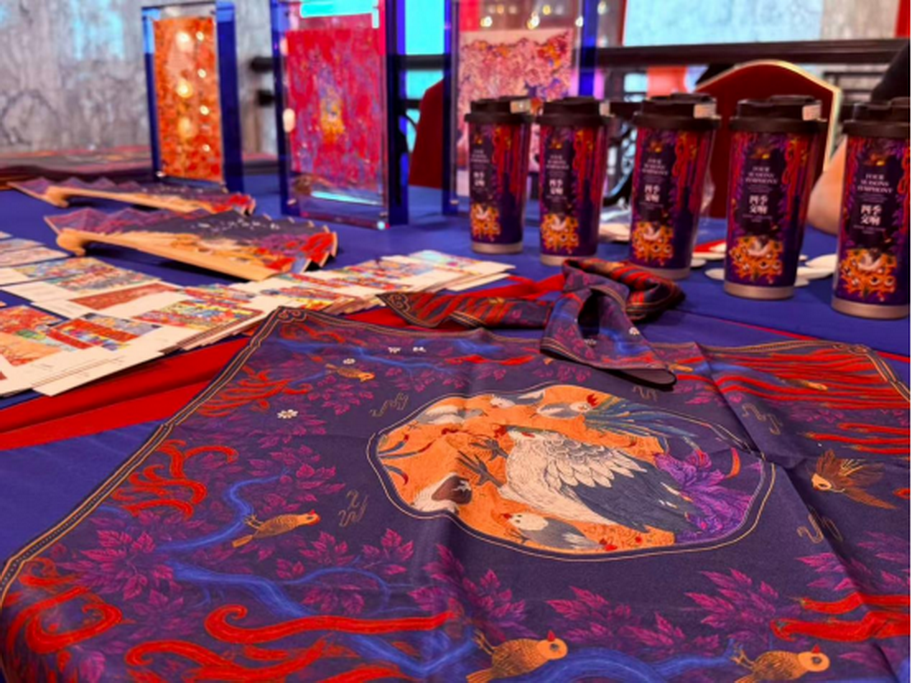
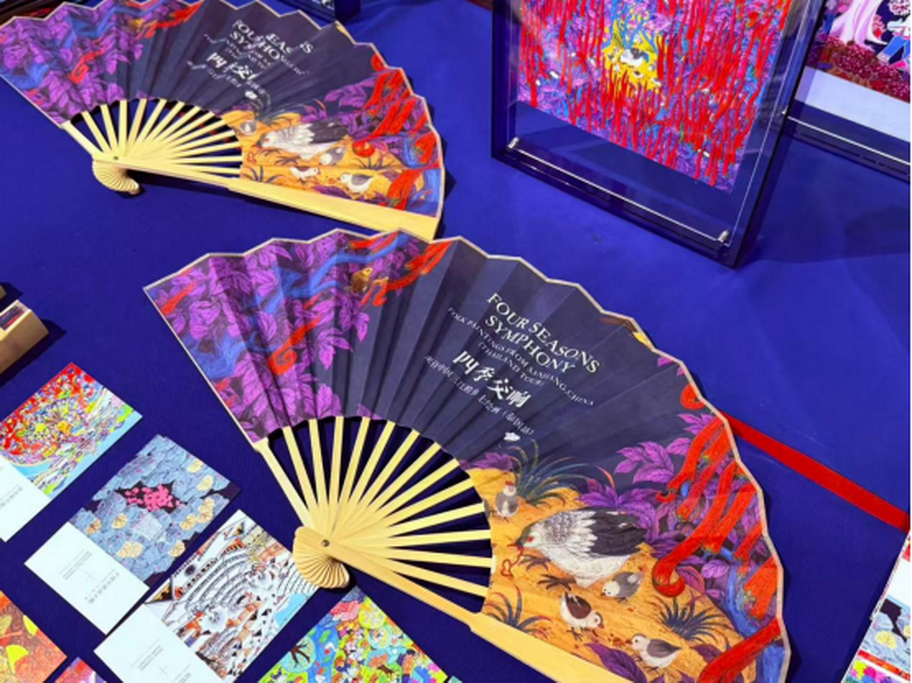
During the exhibition, Professor Xiang Yong presented a Dong painting-themed silk scarf to Asst. Prof. Dr. Kitti Phothikitti, Vice President of AU. While demonstrating the design, he explained the cultural symbolism behind the floral motifs and traditional color palette incorporated into the scarf.
The flowing botanical patterns, rooted in the natural landscape of Dong villages, were elegantly reinterpreted on silk, highlighting the refined beauty of traditional Chinese rural aesthetics.
As an extension of the original artworks, these cultural products provide an accessible and engaging medium for cross-cultural communication. Rather than remaining confined within museum walls, the artistic spirit of Sanjiang accompanies everyday life through objects that people can wear, use, and appreciate.
When Thai students and visitors incorporate these products into their daily routines, the paintings are transformed from distant cultural exhibits into familiar companions that foster emotional connection and cultural understanding. This approach exemplifies the exhibition’s broader vision of bringing rural aesthetics into everyday life while allowing traditional artistic heritage to flourish in contemporary society.
Through these thoughtfully designed products, the organizers seek not only to preserve traditional craftsmanship but also to create new opportunities for dialogue, appreciation, and shared cultural experiences between China and Thailand.
Academic Salon: Exploring the Contemporary Value of Dong Rural Painting from Interdisciplinary Perspectives
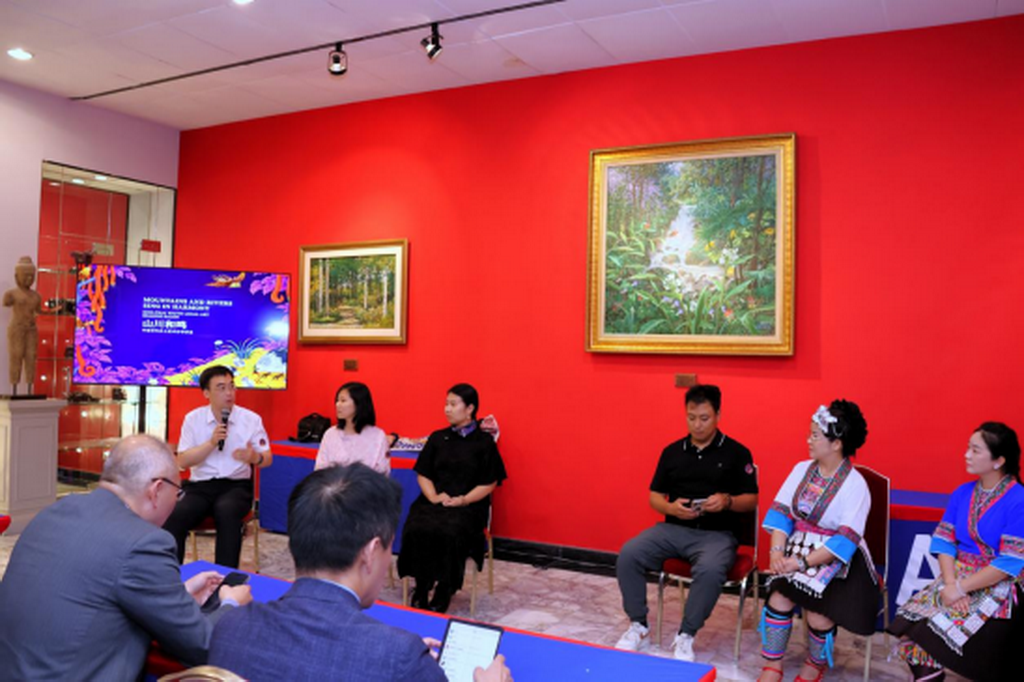
On the day of the opening ceremony, the accompanying academic forum, “Harmony of Mountains and Rivers: China–Thailand Youth Salon on Rural Art,” was held concurrently. Scholars, artists, and students from universities in China and Thailand gathered to engage in interdisciplinary discussions on the cultural significance, artistic characteristics, and international communication of Sanjiang Dong rural painting.
Expanding the Global Journey of “Symphony of the Four Seasons”
Song Liang, Executive Curator of the exhibition, introduced the international development of the “Symphony of the Four Seasons” touring exhibition. Prior to its Thailand stop, the exhibition had been presented in France, Serbia, and Japan, making Bangkok the fourth international destination of the global tour.
He noted that the project has consistently sought to tell the story of China’s rural life through the universal language of folk art. The exhibition not only expands the international presence of the “Symphony of the Four Seasons” brand but also continues its mission of promoting dialogue among civilizations and strengthening people-to-people connections through artistic exchange.
The exhibition is organized into four thematic sections corresponding to the changing seasons:
- Spring Awakening
- Summer Flourishing
- Autumn Harvest
- Winter Preservation
Together, these four chapters reflect the agricultural rhythms and seasonal lifestyle of the Dong communities in Sanjiang.
Song highlighted several distinctive visual characteristics of Dong rural painting, including richly layered compositions, vibrant festive colors, and imaginative, childlike forms. Through these expressive artistic features, the exhibition conveys the vitality of Chinese rural culture and introduces international audiences to the enduring spirit of traditional village life.
Visual Cognition and the Narrative Power of Folk Art
Professor Zhang Xinfeng from the University of Chinese Academy of Sciences examined Dong rural painting from the perspectives of visual cognition and artistic perception.
He observed that Dong paintings do not seek photographic realism or meticulous representation of individual objects. Instead, they portray complete scenes of everyday life, allowing viewers ample space for imagination while preserving the authenticity and emotional power characteristic of folk art.
According to Professor Zhang, narrativity is one of the defining aesthetic qualities of Dong painting. Every artwork tells a complete story rooted in local customs and lived experiences, making the paintings naturally accessible across cultural and linguistic boundaries.
Looking toward the future, he suggested integrating augmented reality (AR) and virtual reality (VR) technologies into exhibition design. By creating immersive and interactive digital experiences, audiences could virtually enter the seasonal landscapes of Dong villages, thereby expanding new possibilities for the international communication of China’s intangible cultural heritage.
A Distinctive Voice within Chinese Folk Art
Associate Professor Liu Lu of Minzu University of China traced the historical development of Chinese folk art while analyzing the artistic language of Sanjiang Dong painting.
She pointed out that Dong rural painting combines the expressive spirit of traditional Chinese ink painting with the bold graphic qualities of Chinese folk paper-cutting. Its vigorous brushwork, rustic style, and highly recognizable visual language distinguish it from other forms of Chinese folk art.
Unlike classical Chinese landscape painting, which often emphasizes poetic subtlety and philosophical reflection, Dong painting is firmly rooted in ordinary rural life. Farmers drying grain, children fishing, and young people performing the Lusheng dance all originate from the artists’ own daily experiences.
This intimate connection between artistic creation and lived experience gives Dong painting a unique place within contemporary Chinese folk art.
Presenting these vibrant depictions of everyday village life in Thailand, she noted, enriches international audiences’ understanding of the diversity of Chinese folk traditions while offering a vivid and multidimensional window into Chinese culture.
A Visual Epic Growing from the Earth
Ms. Zhou Tiange from Beijing Normal University described Sanjiang Dong painting as “a visual epic that grows from the soil and the stilted wooden houses of the Dong villages.”
She argued that one of the defining characteristics of the art form is its embodied creativity. The artists are not detached observers but active participants in rural life. Their depictions of spring cultivation emerge from their own farming experiences, while their portrayals of autumn harvests are grounded in genuine memories of agricultural labor.
Using Chen Yuqiu’s representative works—Songs of Joy in the Dong Village, Birds Returning with the Sheep, Returning Home with Baskets Full of Grain, and The Sweetness of a Bountiful Harvest—as examples, Zhou explained that the artist transforms everyday moments through romanticized colors and exaggerated imagery.
These creative choices celebrate abundance, joy, and the vitality of life. Viewers can almost hear the sounds of village festivals and experience the rhythms of Dong life through the paintings themselves.
It is precisely this immediacy and emotional authenticity, she noted, that enables Dong rural painting to transcend linguistic barriers and resonate with audiences from different cultural backgrounds.
Passing on an Intangible Cultural Heritage
Professor Chen Yuqiu also reviewed the history and current development of Sanjiang Dong painting.
Originating from the traditional painted decorative arts of the Dong ethnic group, the practice evolved into a large-scale folk art movement during the 1970s. In 2012, it was officially recognized as an item of the Intangible Cultural Heritage of Guangxi Zhuang Autonomous Region.
Over the years, Sanjiang has established a comprehensive talent cultivation model integrating village-based creative studios, school art education, and university partnerships.
This collaborative system has trained thousands of folk artists and fostered a complete creative community spanning four generations. Numerous works have been selected for national art exhibitions, while several young artists from Sanjiang have achieved national recognition at remarkably early ages.
The Four Artistic Characteristics of Dong Rural Painting
Local Sanjiang artist Shi Xin concluded the salon by summarizing the four defining characteristics of Dong rural painting:
- Panoramic compositions filled with rich visual elements and minimal empty space;
- Highly saturated colors derived from the traditional palette of Dong embroidery;
- Boldly simplified and exaggerated figures, creating a lively and expressive visual language;
- The integration of iconic Dong cultural symbols, including Drum Towers, Dong brocade, traditional festivals, and other elements unique to Dong ethnic culture.
Shi emphasized that while the art form remains deeply rooted in its indigenous cultural heritage, it has also successfully adapted to contemporary aesthetic sensibilities, enabling it to engage audiences both within China and around the world.
Workshop: A Cross-Cultural Creative Experience Inspired by Intangible Cultural Heritage
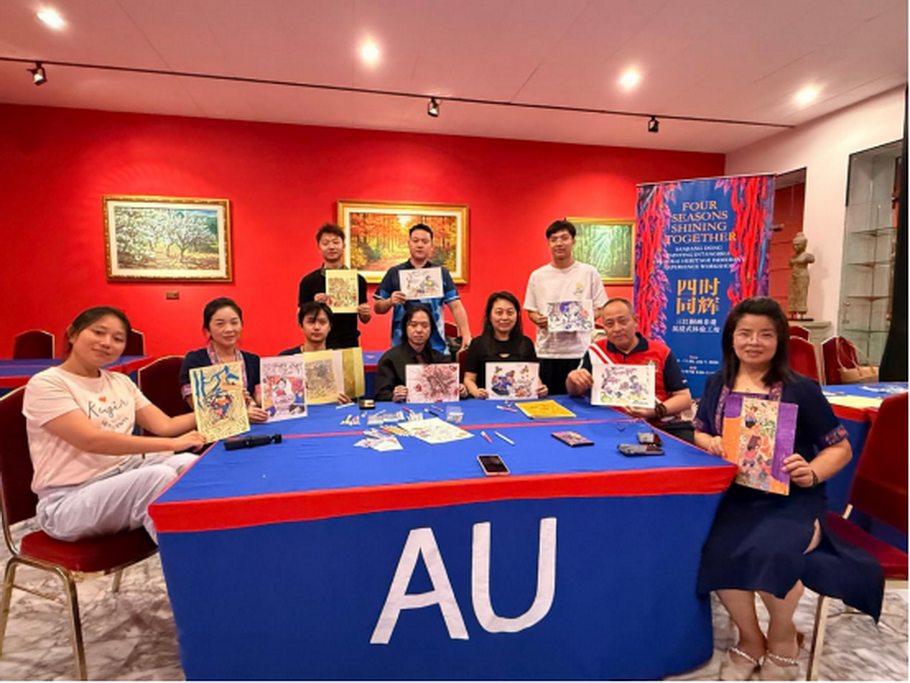
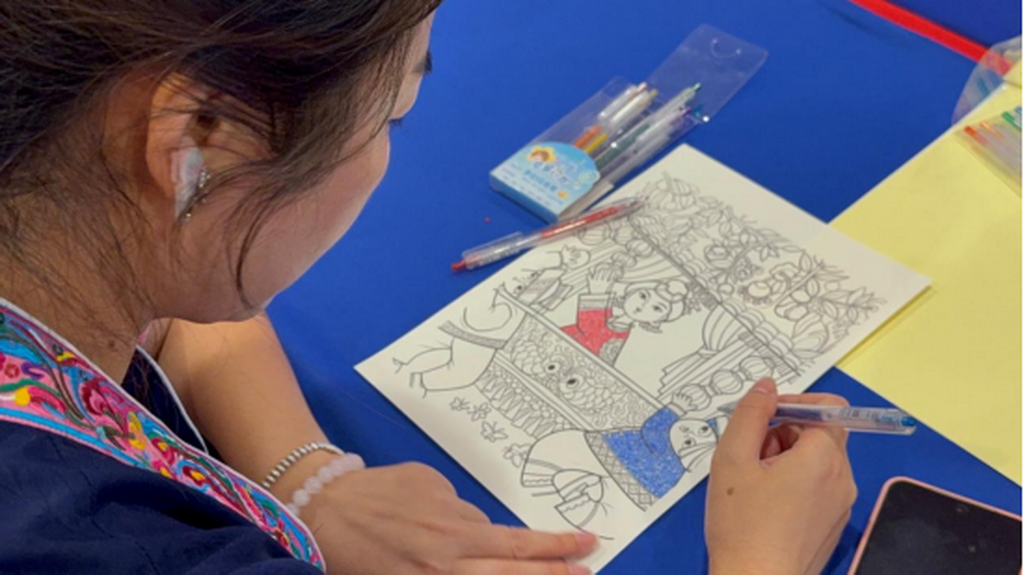
On July 7, the exhibition’s immersive educational program, “Shared Seasons: Sanjiang Dong Painting Intangible Cultural Heritage Workshop,” was successfully held at Assumption University of Thailand.
During the workshop, Professor Chen Yuqiu introduced participants to the artistic philosophy, creative techniques, and cultural significance of traditional Dong rural painting. Students from different countries were provided with painting materials and standardized line drawings based on classic Dong painting motifs, allowing them to freely interpret the artworks through their own choice of colors and artistic expression.
Young participants from diverse cultural backgrounds enthusiastically picked up their brushes, reimagining traditional Dong patterns and color schemes through their own aesthetic perspectives. Each completed artwork became a unique dialogue between cultures, reflecting both respect for tradition and individual creativity.
More importantly, the workshop transformed cultural exchange from passive appreciation into active participation. Rather than simply viewing the artworks, participants became co-creators, engaging directly with an intangible cultural heritage through artistic practice.
As students from different countries reinterpreted the visual language of Dong painting with fresh colors and personal imagination, cultural exchange evolved beyond one-way presentation into a process of shared creativity. Through every brushstroke, participants experienced firsthand how artistic collaboration can foster mutual understanding and friendship across cultures.
Exhibition Information
The Thailand edition of “Symphony of the Four Seasons: Rural Paintings from Sanjiang, China” runs from July 6 to July 26, 2026, and is open to the public free of charge.
The organizers hope that visitors from Thailand and beyond will discover the enduring vitality of Chinese rural culture through the exhibition and gain a deeper appreciation of the artistic traditions of the Dong ethnic community.
Building Bridges Between Civilizations Through Art
Ethnic culture possesses a remarkable ability to transcend geographical boundaries.
From the stilted wooden villages of Sanjiang to the exhibition halls of a university in Bangkok, the paintings of the Dong people carry with them stories of changing seasons, everyday life, and cultural memory. Together, they compose a harmonious visual symphony that celebrates mutual learning between Chinese and Thai civilizations.
This international touring exhibition represents an important milestone in bringing China’s rural intangible cultural heritage to the global stage. It also demonstrates how art can serve as a bridge connecting people, fostering cultural dialogue, and strengthening mutual understanding between China and Thailand.
Looking ahead, Sanjiang Dong rural painting will continue to document the evolving story of rural revitalization through its sincere and vibrant artistic language. Rooted in the everyday lives of local communities while reaching audiences around the world, these paintings will continue to convey the warmth, creativity, and cultural vitality of rural China, contributing to deeper international appreciation of Chinese civilization and its rich artistic heritage.
Those interested in the Master of Arts and Design program, please contact us:
WRITER : TCIC
More Information about Office of Graduate Studies, please visit:
Website: https://www.grad.au.edu/ , http://tcic.au.edu/ https://ci.au.edu/
Facebook: https://www.facebook.com/abacgraduate/
Instagram: www.instagram.com/au_grad_studies
Twitter: https://twitter.com/AbacGrad
E-mail: grad@au.edu
Tel: (+66)-2783-2222 Ext.1360-61