



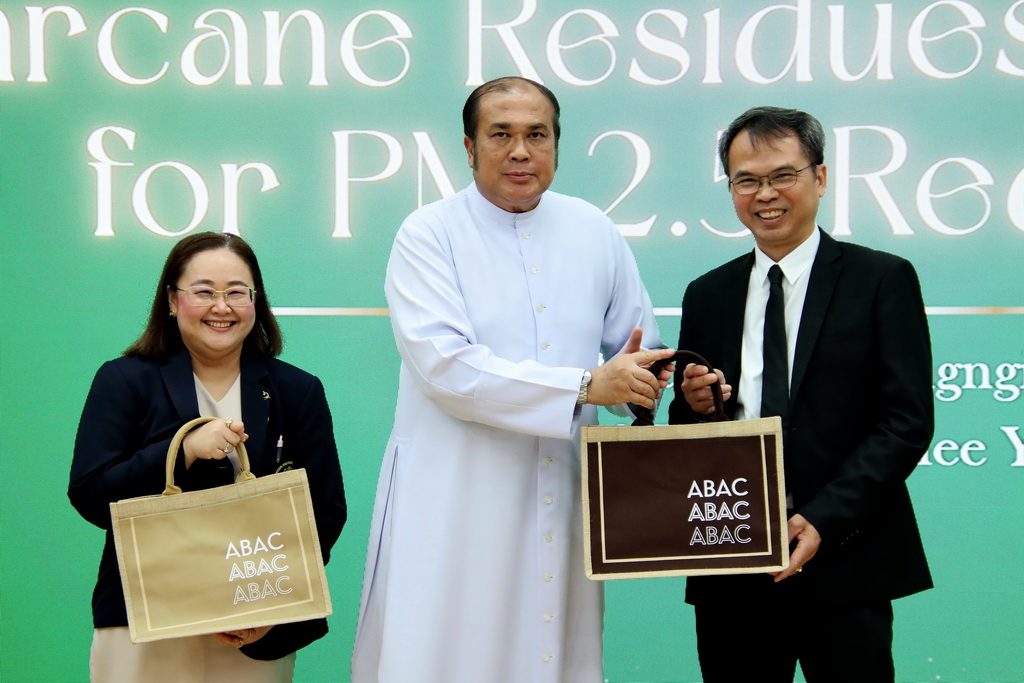
The FBI spotlighted smarter sugarcane residue use to help cut PM2.5.
Assumption University of Thailand (AU)’s Theophane Venard School of Food Biotechnology and Innovation (FBI) hosted an FBI Seminar on Wednesday, 4 February 2026, at Salle d’Expo, Hua Mak Campus, exploring how sugarcane residues can be transformed into practical innovations that support PM2.5 reduction.
Headlining the session was Mr. Sitthirong Rengngieb, Deputy Secretary-General of the Office of the Cane and Sugar Board (OCSB), Ministry of Industry, who addressed the topic: “Innovative Transformation of Sugarcane Residues: A Strategy for PM 2.5 Reduction”.
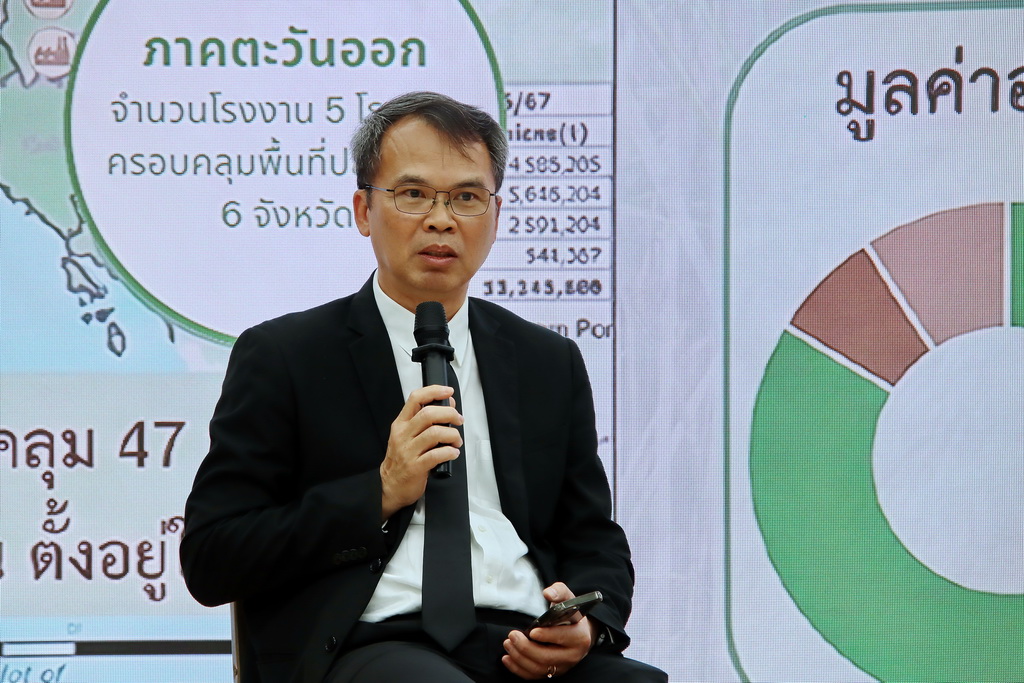
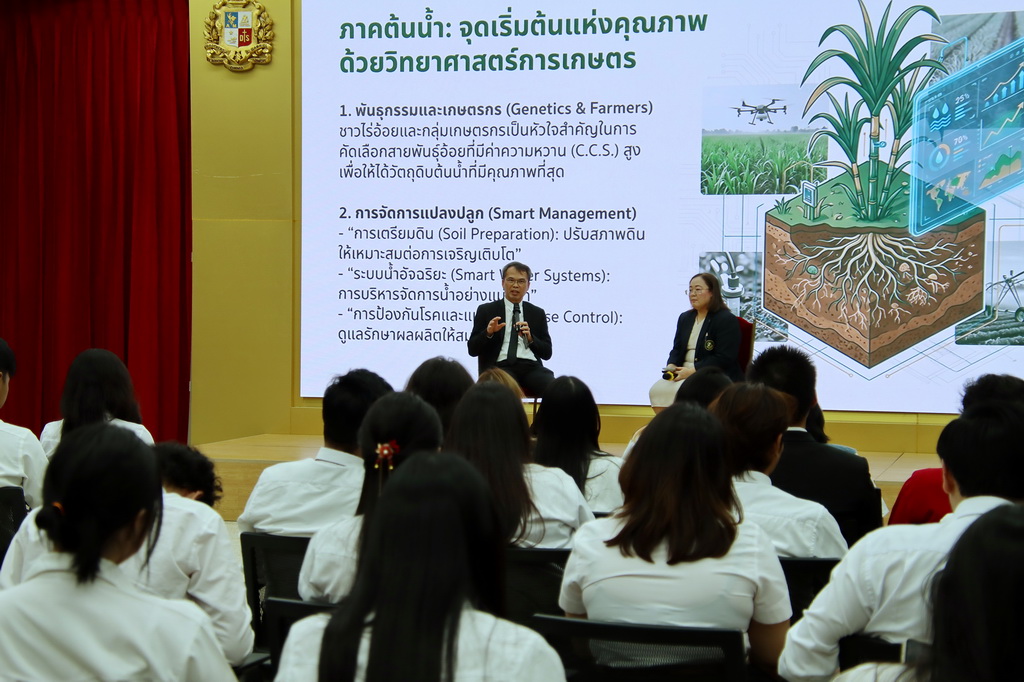
Thailand’s urgency on PM 2.5 has been matched by new, practical action in the sugarcane sector. National measures have targeted the reduction of sugarcane burning through a mix of stricter enforcement, support for farm machinery and low-interest financing, incentives for delivering fresh (unburned) cane, and coordinated monitoring through a dedicated “war room.” Together, these steps have aimed to curb field burning at the source, where smoke begins, while accelerating the shift toward cleaner harvesting and higher-value use of sugarcane residues.
The seminar reflected FBI’s mission-driven focus on applied science—connecting food biotechnology, industrial realities, and environmental urgency—while encouraging students and the AU community to think beyond “waste” and toward solutions with real-world impact.
WRITER: THE AU LIBRARY
More Information about Theophane Venard School of Food Biotechnology and Innovation, please visit:
Website: https://foodbiotech.au.edu/
Facebook: https://www.facebook.com/FoodBiotechABAC
Instagram: https://www.instagram.com/foodbiotechau
TikTok: https://www.tiktok.com/@foodbiotechabac
E-mail: foodbiotech@au.edu
Tel: (+66)-2783-2222 Ext. 3793, 3796